Roof Repair
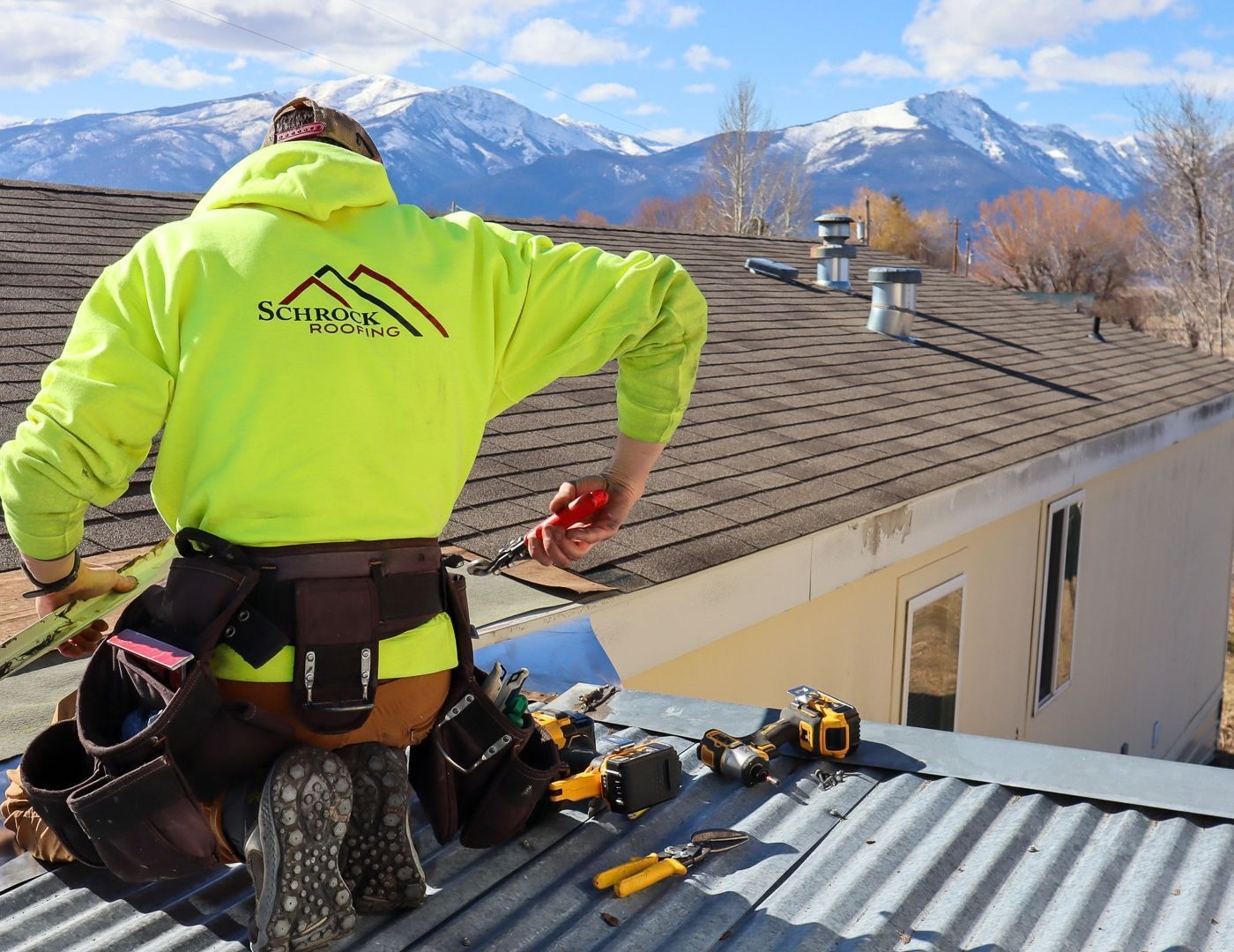
We trace where water is entering, inspect the surrounding roofing and flashing, and repair the actual failure, not just the stain or drip you can see inside the home.

Water entering the home now? Protect the interior first and call us. For a recurring or unexplained leak, request an assessment so we can trace the source before recommending the repair.
Start With the Water Path
The Wet Spot Inside May Be Several Feet From the Roof Failure
Water can follow decking, underlayment, framing, insulation, pipes, and ceiling surfaces before it becomes visible. Patching the roof directly above a stain can miss the actual entry point.
Schrock Roofing checks the roof surface, flashings, penetrations, transitions, drainage, and the clues inside the house before defining a repair. We trace what failed, correct the surrounding details that belong in the work, and tell you what the rest of the roof can reasonably support.
What Are You Seeing?
Use the Symptom to Start the Investigation
Tell us when and where the water appears
Rain direction, snowmelt, wind, temperature, plumbing use, and how long the leak continues help us separate a roof leak from condensation or another moisture source. Move belongings and contain active water safely while we arrange the assessment.
Missing material exposes more than one small area
Wind can lift or remove shingles and disturb nearby seal strips, fasteners, underlayment, edges, and flashings. The surrounding shingles must remain flexible and compatible enough to accept a repair.
Walls and penetrations are common failure points
Chimneys, skylights, plumbing vents, roof-to-wall intersections, valleys, and additions depend on layered flashing details. Surface caulk may slow water temporarily, but it does not rebuild a failed flashing system.
Snow and ice can expose drainage and ventilation problems
Snow movement, ice buildup, freeze-thaw cycles, blocked drainage, and heat loss may contribute to water entry. The repair may require more than replacing the visible roofing material.
The metal roof type changes the repair
Standing-seam and exposed-fastener roofs fail differently. Seams, clips, laps, washers, fasteners, penetrations, sealants, panel movement, and rust all need to be evaluated with the actual metal system in mind.
A repeated leak needs a broader look
If the same area has been patched several times, the visible opening may not be the only problem. We check the nearby details, trapped moisture, brittle material, decking, and earlier repairs before adding another patch.
Find the Failure Before Defining the Work
What Schrock Roofing Checks During a Roof Repair Assessment
Inside the House
When we can get to them, we check stains, active moisture, attic conditions, insulation, framing, and when the leak appears.
Roof Surface
We check for missing, cracked, lifted, punctured, loose, corroded, or poorly repaired roofing around the suspected area.
Details and Drainage
We inspect valleys, eaves, walls, penetrations, flashings, gutters, low-slope transitions, snow paths, and where water is moving.
Whether a Repair Will Hold
We look at the roofing around the damage, whether we can match it, how much moisture got in, the decking, earlier repairs, and how much life the rest of the roof has left.
Common Repairable Details
The Repair Must Match the Roof and the Failure
Shingles and Edges
Replace repairable damaged shingles and address compatible underlayment, fasteners, starter, drip edge, eaves, or rake details where the failure reaches them.
Flashings and Valleys
Correct failed step, headwall, chimney, valley, sidewall, or counterflashing details instead of relying on exposed sealant as the permanent repair.
Vents and Penetrations
Repair or replace compatible boots, flashings, curbs, caps, fasteners, and surrounding roofing at plumbing, exhaust, skylight, and mechanical penetrations.
Standing-Seam Metal
Evaluate seams, clips, transitions, closures, penetrations, coating condition, sealant joints, and panel movement before specifying the repair.
Exposed-Fastener Metal
Review loose or backed-out fasteners, deteriorated washers, panel laps, rust, penetrations, and movement. Random fastener replacement may not solve a broader pattern.
Low-Slope Transitions
Use materials and details compatible with the slope, drainage, existing membrane, adjacent roofing, walls, and terminations. Shingles are not a cure for a low-slope problem.
Repair or Replacement?
The Extent of Failure Matters More Than the Size of the Stain
Localized Repair May Make Sense
A repair is more reasonable when the failure is isolated, surrounding material remains serviceable, compatible replacement materials are available, the deck can support the work, and the rest of the roof is not failing broadly.
- One identifiable entry point or damaged detail
- Serviceable roofing around the repair
- No evidence of widespread moisture or repeated failure
- A repair that can be integrated into the existing roof
Broader Work May Be Smarter
Replacement or a larger corrective scope becomes more likely when leaks recur across several areas, materials are brittle or deteriorated, previous patches are failing, moisture is widespread, or the deck and ventilation require major correction.
- Multiple active or historical leak areas
- Widespread surface, seam, or fastener failure
- Incompatible layers or repairs
- Poor value from continuing spot work
Price and Repair Scope
What Changes the Cost of a Roof Repair?
- Time and access needed to trace the source
- Roof height, pitch, surface conditions, and safe access
- Roofing system, age, brittleness, profile, and material availability
- Number of failed details and size of the affected area
- Decking, underlayment, flashing, insulation, or concealed damage
- Interior or attic access and weather-related urgency
Some repairs can be defined after we inspect the outside. Others require controlled removal before the full problem is visible. Our proposal explains the known work, allowances, and how we will show you and get approval for anything else we find.
From First Call to Follow-Up
The Residential Roof Repair Process
We Listen
We ask where, when, and under what conditions the problem appears.
We Inspect
We check the roof surface, drainage, nearby details, and the interior or attic when we can get to it.
We Trace the Water
We compare the moisture clues with the roof conditions to narrow down the entry path.
We Define the Repair
We explain the proposed work, known limits, access, materials, and exclusions.
We Protect the Area
We prepare safe access and protect the work area, the people in the house, and nearby property.
We Make the Repair
We open only what is needed and rebuild the failed details with compatible materials.
We Record What We Found
We record the conditions, completed work, and any broader concerns that need your attention.
We Follow Up
We review the repair and tell you what to watch, maintain, or plan for next.
From a Schrock Roofing Client
A Repair That Solved the Actual Problem
"I cannot even discern where the damage was located. Thank you for a job well done."
David Stover
Direct Answers
Residential Roof Repair FAQs
Can Schrock Roofing find a leak if the roof looks fine?
Often, yes. Schrock Roofing checks flashings, penetrations, valleys, walls, transitions, fasteners, condensation clues, and water movement because surface damage is only one part of the investigation. Some leaks require a controlled opening or the right weather conditions before we can confirm the source.
Can you repair only the damaged part of my roof?
Yes, when the failure is isolated and the surrounding roof can accept a compatible repair. Schrock Roofing explains what we will repair, what remains, and any limits caused by age, matching, brittle material, or conditions we cannot see yet.
Does a roof leak mean I need a full replacement?
No. A single leak may come from one repairable flashing, penetration, shingle, seam, or fastener condition. Replacement becomes more likely when failure is widespread, leaks recur in multiple areas, materials cannot accept repair, or the deck and ventilation require major work.
Can a roof repair be priced from photos?
Photos can help with initial routing, but they rarely show the full water path, surrounding material condition, roof access, or concealed damage. A reliable scope usually requires an on-site assessment.
What should I do while the roof is actively leaking?
Move belongings away from the water, contain dripping safely, document the affected area, and avoid climbing onto a wet, snowy, icy, or steep roof. If water is near electrical fixtures or creates a ceiling-bulge hazard, keep people clear and contact the appropriate emergency professional.
Will new shingles match my existing roof?
Schrock Roofing will discuss the expected appearance before you approve the work. An exact match is not always possible because of age, weathering, discontinued colors, production changes, and material availability. Compatibility and repair performance come first.
Can you repair a roof during Montana winter?
Some repairs may be possible, but snow, ice, temperature, wind, daylight, safe access, and manufacturer requirements affect what can be completed responsibly. Temporary stabilization may be the appropriate first step when permanent work must wait for workable conditions.
Does Schrock Roofing repair roofs throughout the Bitterroot Valley?
Schrock Roofing serves homeowners in Missoula and throughout the Bitterroot Valley, including Lolo, Florence, Victor, Hamilton, and nearby Western Montana communities. Availability depends on the address, roof condition, access, urgency, material needs, and schedule.
Missoula and the Bitterroot Valley
Find the Failure Before Another Patch Is Added
Tell Schrock Roofing what you are seeing, when it happens, and whether the area has been repaired before. We will start with the evidence and the roof you actually have.
Request a Roof Repair Assessment