Roof System and Age
We identify the material, layers, attachment, earlier work, surface condition, and whether compatible repair materials are available.
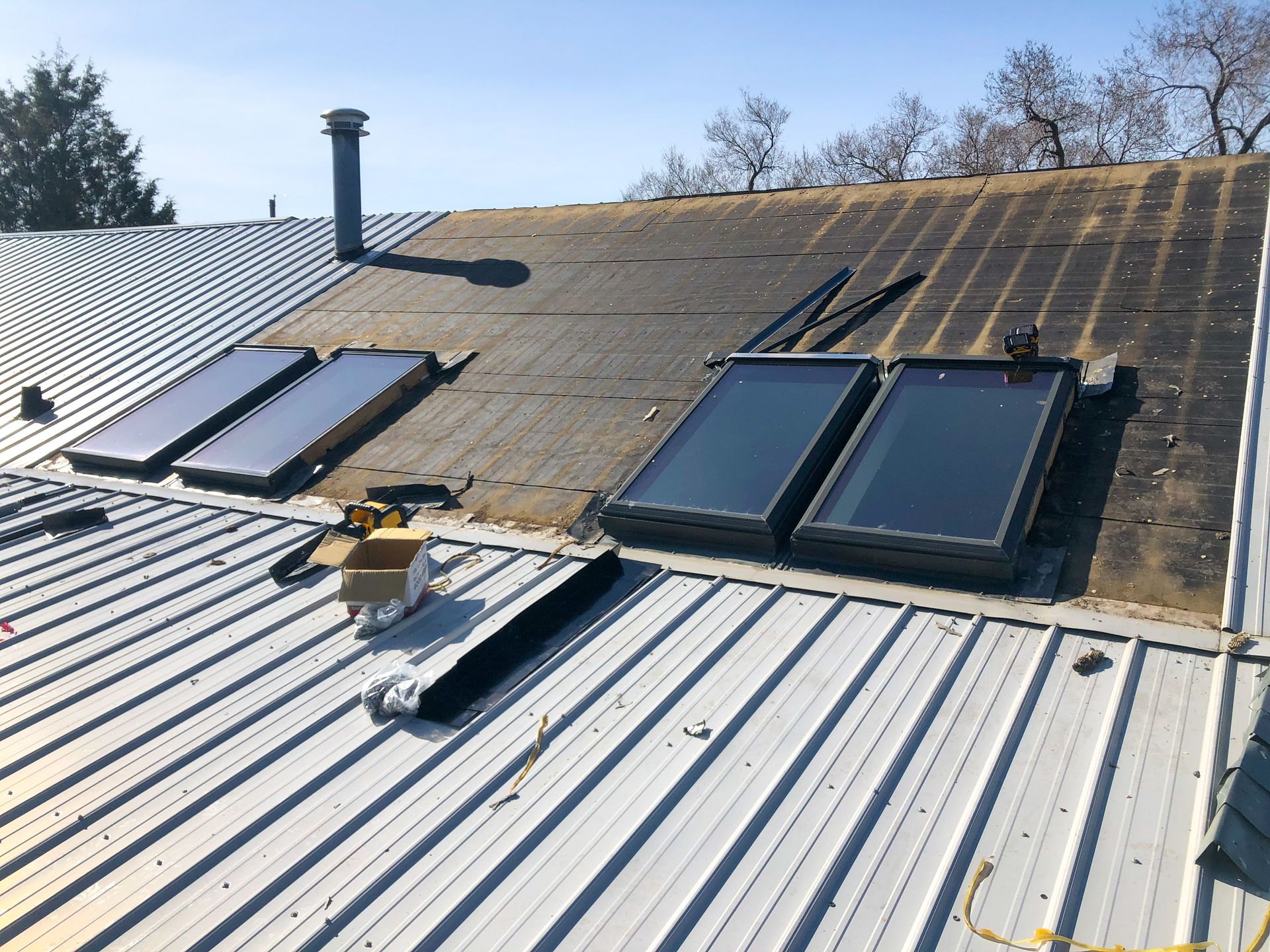
We help building owners and facility teams trace active leaks, identify what failed, and determine whether a targeted repair makes sense based on the condition of the entire roof—not just where the water appeared inside.
Water entering the building now? Call our team. Dealing with recurring leaks or planning future maintenance? Request a commercial roof assessment so we can inspect the roof, document what we find, and recommend the right next step.
Start With the Failure, Not the Stain
Water can travel along insulation, deck seams, fasteners, structural members, and roof layers before it becomes visible. That is why a ceiling stain alone cannot define the repair.
We review the interior evidence and the roof together. We identify the roof system, inspect seams, flashings, penetrations, edges, drains, and surrounding materials, and determine whether the failure appears isolated or part of a larger condition.
If the surrounding roof remains serviceable, a compatible repair may stop the leak and preserve useful roof life. If moisture or failure extends beyond a responsible repair boundary, we will explain the larger options.
What Are You Seeing?
Choose the condition closest to what is happening at your building. The roof still needs to be inspected before the repair can be defined.
Active water entry may require interior protection or temporary stabilization before a permanent repair can be installed. Call us and describe the leak location, interior risk, roof access, and current weather.
A stain can appear after rain or snow has passed, and the visible location may be several feet from the opening. We trace the likely moisture path and inspect the surrounding roof details.
Water near an HVAC unit may come from the curb flashing, equipment, piping, condensation, a nearby seam, or water traveling from farther upslope. The roof and equipment conditions need to be separated.
Ponding water and freeze-thaw cycles can stress seams, flashings, drains, scuppers, and earlier repairs. Fixing the leak may also require correcting debris, a blocked outlet, or a localized drainage condition.
Wind can open edges, seams, flashings, panels, and rooftop details. Hail or debris can damage the roof surface or equipment. We document what we can observe and define the roofing work; the carrier decides coverage.
If the same area has leaked more than once, the moisture path, failed detail, wet materials, or surrounding roof condition may extend beyond the previous repair. We reassess the full area before adding another patch.
What We Evaluate
The same-looking leak can require a different repair on TPO, PVC, EPDM, asphalt-based roofing, metal, or a coated system.
We identify the material, layers, attachment, earlier work, surface condition, and whether compatible repair materials are available.
We inspect field seams, walls, curbs, penetrations, edges, terminations, transitions, and other details near the suspected failure.
Visible evidence, test cuts when included, moisture mapping, or thermal information may help define what must be removed and replaced.
Drains, scuppers, gutters, low areas, debris, ponding, snow movement, and overflow paths can contribute to repeated leakage.
Loose, damaged, corroded, or deteriorated components can change a surface repair into a deeper repair with structural coordination.
Occupants, equipment, inventory, entrances, sensitive interiors, access, noise, odors, and work hours affect how the repair is planned.
Use the Smallest Scope That Solves the Actual Problem
The answer depends on how much of the roof is affected and whether the remaining assembly can continue doing its job.
Repair makes sense when the failed detail and wet materials can be clearly bounded and the surrounding roof remains serviceable.
Restoration may fit an aging but serviceable roof after failed areas are repaired and the existing system qualifies for a compatible reinforced coating assembly.
Replacement becomes more reasonable when moisture, failure, attachment, deck conditions, drainage problems, or aging affect broad areas of the roof.
What a Permanent Repair Includes
A permanent scope may include opening the affected area, removing wet insulation, replacing damaged substrate, preparing the existing roof, and installing compatible membrane, flashing, metal, sealant, fasteners, or reinforcement.
Our proposal identifies where the work will occur, what’s included, what sits outside the repair boundary, how we’ll handle anything we discover, and whether the repair affects an existing manufacturer warranty.
Temporary stabilization is different. It is intended to reduce immediate water entry until weather, materials, access, or roof conditions allow the permanent work to be completed.
How We Handle Commercial Roof Repair
We learn where and when water appears, what is at risk inside, and how the roof can be accessed.
We trace likely entry points and inspect surrounding seams, flashings, penetrations, drainage, and earlier repairs.
We determine the repair boundary, materials, wet-area handling, access, protection, and permanent next step.
We prepare the existing system and install a compatible repair within the approved scope and weather window.
We identify the repaired area, completed work, known remaining conditions, coverage, and recommended follow-up.
Repair Cost and Timing
The visible opening may be small, but tracing the leak, reaching the roof, removing wet materials, and rebuilding the failed detail can change the scope.
Leak tracing, interior access, test cuts, moisture mapping, thermal work, or return visits may be needed to define the source.
Material type, age, layers, attachment, surface condition, compatibility, and availability of matching components affect the method.
Wet insulation, damaged cover board, deteriorated decking, and moisture that traveled beyond the visible failure increase the repair boundary.
Curbs, walls, edges, penetrations, drains, scuppers, transitions, and custom metal usually require more work than an open field area.
Ladders, lifts, secure areas, interior protection, occupied spaces, rooftop equipment, restricted hours, and staging affect labor and planning.
Snow, ice, wind, temperature, substrate moisture, emergency stabilization, and product limits affect what can be completed and when.
Commercial Roof Repair in Western Montana
Snow, ice, freeze-thaw movement, wind, summer heat, ultraviolet exposure, and rooftop service traffic all affect commercial roofs in Western Montana. Those conditions also control when surfaces are dry enough and temperatures are suitable for permanent repair materials.
We serve commercial properties in Missoula, Victor, Hamilton, Ravalli County, Lolo, Florence, Frenchtown, the Bitterroot Valley, and nearby communities. Response and scheduling depend on safety, weather, location, roof access, urgency, system type, and the work required.
Related Commercial Roofing Services
Straight Answers About Commercial Roof Repair
Yes, when the failure and wet materials can be isolated and the surrounding roof remains serviceable. We inspect the affected area and the condition around it before deciding whether a localized repair is responsible.
We provide commercial roof leak investigation and repair. If water is actively entering, call (406) 961-2990 and describe the building, interior risk, roof access, and weather. Response timing depends on safety, weather, location, access, scope, and crew availability.
Temporary stabilization is intended to limit immediate water entry. A permanent repair corrects the failed roof detail with compatible materials after the roof condition, moisture, access, and weather allow the work to be completed correctly.
A localized repair may take one mobilization. Leak tracing, diagnostic work, wet-insulation removal, custom metal, lift access, tenant coordination, or a separate weather window can extend the schedule.
Often it can, but that depends on the leak location, interior exposure, access, equipment, noise, odors, falling-object risk, and the repair method. We identify controlled areas and any temporary restrictions before work begins.
Some stabilization and repair work may be possible, but snow, ice, wind, temperature, substrate moisture, daylight, access, and product limits determine what can be installed safely and permanently.
It can. Manufacturer warranties may require approved materials, specific installation methods, documentation, notification, or work by an authorized contractor. We’ll review the warranty before we repair anything, when one is in effect.
You’ll get a closeout that identifies the repaired location, the failure we found, the work completed, photographs where included, any known remaining conditions, applicable repair coverage, and the inspection or maintenance interval we recommend.
Schrock Roofing Inc. • Missoula & Victor, Montana
Tell us where water is appearing, when it started, what is at risk inside, and what you know about the roof. We’ll inspect the affected area and define the repair the existing system can support.