
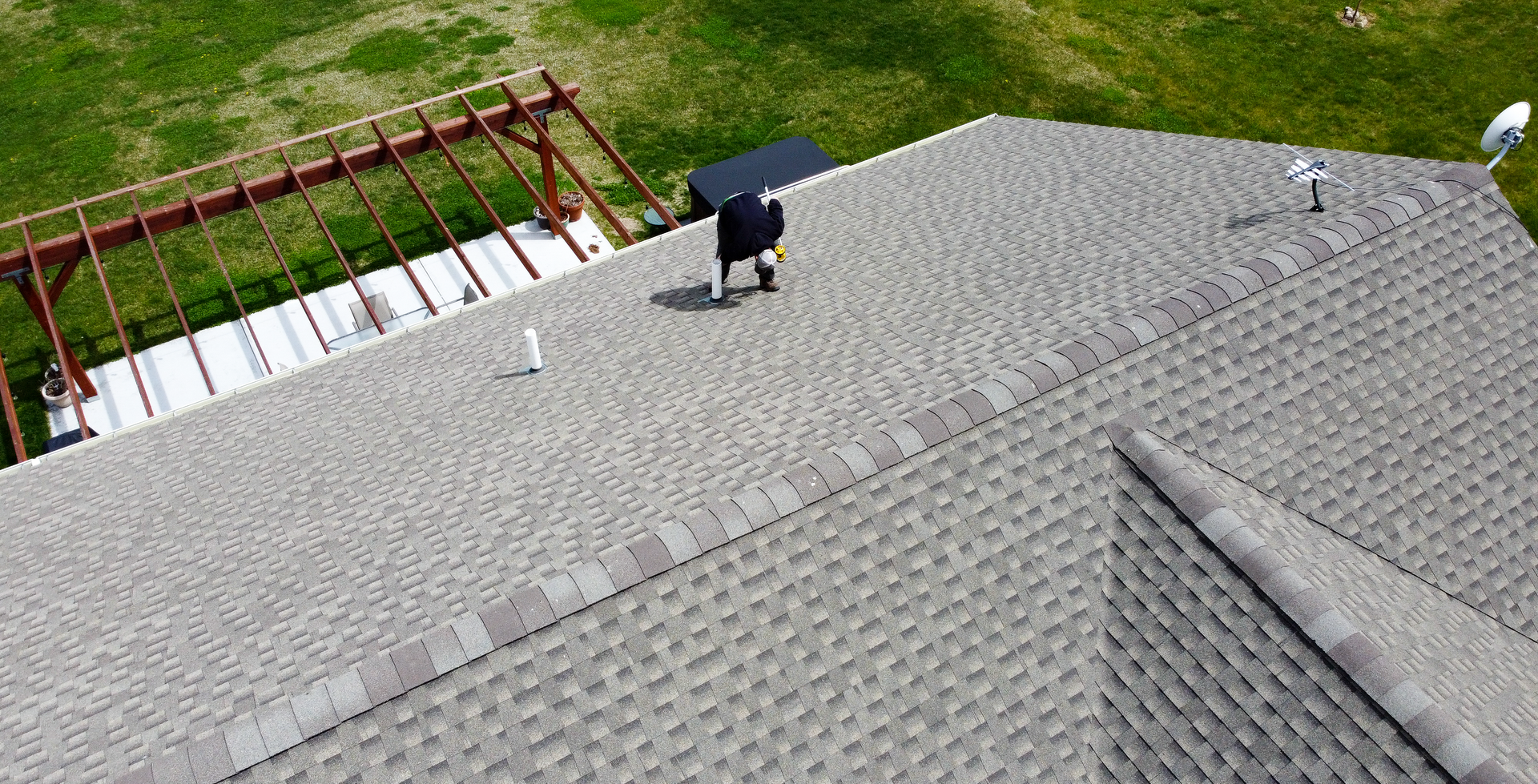
Residential Roof Inspections
Evaluate accessible roof components, document visible conditions, and understand whether the next step is monitoring, maintenance, repair, or replacement planning.

Inspection findings are limited to the agreed scope and accessible conditions. Concealed damage, destructive testing, engineering, code certification, and repairs require separate authorization when applicable.
Start With the Question the Roof Must Answer
Not Every Roof Inspection Has the Same Purpose
A leak investigation, storm review, maintenance baseline, purchase concern, warranty question, and replacement decision require different access, documentation, and urgency.
Schrock Roofing begins by defining why the roof is being inspected and what decisions the findings must support. The agreed scope may address roofing materials, flashings, valleys, penetrations, edges, drainage, visible interior or attic evidence, ventilation indicators, prior repairs, and storm-related conditions when those areas are relevant and safely accessible.
Define the Inspection
Why Are You Having the Roof Inspected?
Trace the likely water-entry path
Water can travel before appearing indoors. The scope may need the roof surface, penetrations, walls, valleys, attic or interior evidence, moisture testing, and controlled diagnostics. Leak investigation can require more work than a general condition review.
Document conditions after wind, hail, snow, or ice
Timing, weather history, material condition, displaced components, impact indicators, openings, flashings, and interior symptoms may matter. The inspection can document observed conditions, but coverage and causation decisions belong to the insurer and the controlling policy.
Separate age from actual condition
Material wear, repairs, exposure, ventilation, snow movement, drainage, and concealed conditions all affect the roof. An inspection can identify visible risk and planning priorities but cannot guarantee an exact remaining service life.
Create a condition record before failure
A baseline helps track changes in materials, flashings, penetrations, drainage, fasteners, sealants, snow devices, and prior repair areas. Any maintenance performed should be separately defined and documented.
Understand roofing concerns before closing
A roofing contractor can address roof-specific questions beyond a general home inspection. The written scope should state what was accessed, what was observed, what remains uncertain, and whether specialist or destructive evaluation is recommended.
Plan repair, replacement, solar, or exterior work
Before another project changes roof access or penetrations, document material condition, flashing details, remaining uncertainties, drainage, ventilation, and the work needed to keep roofing responsibilities clear.
Accessible Roof Conditions
What the Inspection May Evaluate
Surface Materials
Shingles, metal panels, membranes, coatings, seams, laps, fasteners, wear, displacement, impact indicators, and previous repairs.
Flashing and Openings
Valleys, walls, chimneys, skylights, pipe boots, curbs, roof-to-wall areas, transitions, edges, and penetrations.
Drainage and Snow
Gutters, downspouts, valleys, low points, ponding indicators, snow-retention areas, drift zones, and upper-to-lower roof discharge.
Attic and Interior Evidence
When access is included and safe: stains, moisture indicators, decking observations, ventilation patterns, condensation clues, and daylight openings.
Roof Geometry and Access
Slope, height, additions, dormers, mixed materials, dead valleys, nearby trees, equipment, safe access limits, and areas requiring another method.
Maintenance History
Known age, prior leaks, completed repairs, storm dates, warranty records, other-trade work, and changes that help interpret current findings.
What the Record Should Tell You
Findings Need Priorities, Not a Pile of Roof Photos
Useful documentation connects each observed condition to a location, level of concern, limitation, and next action.
- Inspection purpose, date, weather, access, and roof areas reviewed
- Photos or notes tied to specific locations and conditions
- Immediate water-entry or property-protection concerns
- Maintenance and repair items separated from replacement triggers
- Conditions that can be monitored and what change would require action
- Inaccessible or concealed areas and any recommended additional evaluation
A report should not overreach
Visible wear does not automatically prove storm causation. A dry interior does not prove every layer is dry. A drone image does not replace close-up or interior evaluation when those methods are needed. The report should say what is known, what is suspected, and what could not be confirmed.
Montana conditions change the context
Snow loading patterns, ice, freeze-thaw cycles, wind exposure, tree debris, shaded areas, drainage, metal-roof snow release, and seasonal access can affect both the findings and the timing of follow-up work.
Inspection Boundaries
What May Require Separate Authorization?
- Leak tracing beyond a general visual condition review
- Destructive openings, material removal, or core sampling
- Moisture scanning, laboratory analysis, or specialist testing
- Engineering, structural analysis, code certification, or design
- Insurance causation opinions or claim-coverage decisions
- Repairs, maintenance work, emergency protection, or material replacement
- Hazardous, obstructed, snow-covered, or otherwise inaccessible areas
The written inspection scope should define access methods, included documentation, exclusions, deliverables, timing, and the process for approving additional work if the first observations reveal a larger problem.
From Question to Next Step
How the Roof Inspection Moves Forward
Define the Reason
Explain the leak, storm, age, transaction, maintenance, or project concern.
Share Roof History
Provide known age, repairs, leaks, storms, documents, and interior symptoms.
Confirm the Scope
Set access, roof areas, methods, deliverables, limitations, and timing.
Inspect Conditions
Review the safely accessible exterior and agreed interior or attic areas.
Document Findings
Organize observations by location, concern, uncertainty, and priority.
Choose the Action
Monitor, maintain, repair, investigate further, or plan replacement.
Direct Answers
Residential Roof Inspection FAQs
What is included in a residential roof inspection?
The exact scope depends on the purpose. It may include roofing materials, flashings, valleys, penetrations, edges, drainage, visible interior or attic evidence, ventilation indicators, prior repairs, storm conditions, and photo documentation when those areas are relevant and accessible.
Is a roof inspection the same as a leak investigation?
No. A general inspection reviews visible roof conditions. Locating an active water-entry path may require interior or attic access, moisture testing, controlled water testing, material removal, or other diagnostics that should be separately defined.
Can Schrock inspect a roof after a storm?
Yes, Schrock can evaluate and document accessible conditions after a storm. The inspection does not control insurance coverage, policy interpretation, or the insurer’s causation decision.
Can a drone inspect the entire roof?
A drone can document some steep, high, or difficult areas, but it does not replace every close-up, tactile, attic, interior, moisture, or destructive evaluation. The right method depends on the roof and the question being answered.
Can an inspection determine exactly how long the roof will last?
No. It can describe current visible condition, risk, and planning priorities. Weather, materials, installation, maintenance, future events, and concealed conditions prevent an exact remaining-life guarantee.
Will the inspection say whether I need repair or replacement?
The findings should explain whether monitoring, maintenance, repair, further investigation, or replacement planning fits the observed condition. A detailed repair or replacement proposal may be a separate next step.
Does an inspection include repairs?
Not automatically. Inspection, emergency protection, maintenance, leak diagnostics, and repairs are different scopes. Any work to the roof should be authorized and documented before it is performed.
How often should a residential roof be inspected?
There is no single interval for every roof. Age, material, storms, trees, roof complexity, warranty requirements, prior leaks, property changes, and maintenance history should determine timing.
Missoula & Victor, Montana
Inspect the Roof Before Guessing at the Next Step
Tell Schrock Roofing what you need the inspection to answer. The scope can then be built around the roof, the accessible conditions, and the decision in front of you.
Request a Roof Inspection