
Moisture Extent
Wet insulation and trapped moisture must be located and addressed. A coating should not be used to hide broad saturation.
We inspect the existing roof, check for trapped moisture, and evaluate adhesion, drainage, repairs, and overall condition before recommending a commercial roof coating. If the roof is not a good candidate, we’ll explain why and recommend a more appropriate solution.
A roof coating is not paint, and it cannot solve problems caused by wet insulation or widespread roof failure. We qualify the roof first, complete the necessary repairs and preparation, and specify a coating system that is compatible with the existing roof.
Qualification Comes Before Application
A commercial roof coating can create a new weathering surface and extend the service life of a roof that is still in serviceable condition. It cannot make trapped moisture, loose materials, failed flashings, poor drainage, or widespread deterioration disappear.
We start by identifying the existing roof, locating failed and wet areas, reviewing drainage, and checking whether the surface can be cleaned, repaired, and prepared for the proposed coating. If the roof qualifies, we define the repairs and reinforcement that must happen before the coating is installed. If it does not, we explain what is pushing the scope toward restoration, recover, or replacement.
Start With the Roof You Have
Choose the closest roof type below. Final compatibility still depends on the exact membrane, existing coatings, surface condition, moisture, preparation, and manufacturer requirements.
We identify the membrane and review seams, flashings, attachment, surface weathering, contamination, earlier repairs, and moisture. Primer, cleaner, reinforcement, and coating chemistry must be approved for the specific roof.
A metal coating scope may require rust treatment, fastener replacement or encapsulation, seam reinforcement, panel repairs, and detailed work around curbs, edges, penetrations, and transitions before the field is coated.
Modified-bitumen and built-up roofs can have splits, blisters, loose surfacing, oil migration, wet insulation, and weak repairs. The surface must be stable and compatible with the proposed primer and coating.
We review adhesion, thickness, wear, cracking, ponding exposure, repairs, and contamination. A new product cannot simply be assumed compatible with the coating already on the roof.
Exposed, wet, crushed, blistered, or poorly adhered foam must be corrected before recoating. We also check drainage, penetrations, surface profile, and whether the existing coating can accept the new system.
Roof records, core samples when authorized, visible laps, flashings, surface characteristics, and earlier repair materials can help establish what is on the building and what testing is needed next.
What Makes a Roof a Candidate
Qualification is based on the roof as a whole. A clean-looking surface is not enough.
Wet insulation and trapped moisture must be located and addressed. A coating should not be used to hide broad saturation.
The membrane, panels, insulation, and deck must be adequately attached and stable enough to remain part of the roof.
Dirt, oils, rust, loose surfacing, chalking, biological growth, and earlier products affect cleaning, primer, and adhesion.
Ponding areas, blocked drains, low spots, scuppers, gutters, overflow routes, and snow or ice patterns affect product selection and scope.
Seams, fasteners, flashings, curbs, penetrations, edges, transitions, and expansion points often require reinforcement before field coating.
Testing and manufacturer requirements help determine whether the proposed primer and coating will bond to the prepared roof.
Coat, Correct, or Change the Scope
The right answer depends on how much of the existing assembly can responsibly remain in service.
The roof is generally dry, stable, attached, repairable, cleanable, and compatible with a tested coating system.
Localized wet areas, failed details, rust, damaged materials, drainage trouble, or loose components can be repaired within a clearly defined scope.
Broad moisture, widespread failure, weak attachment, deteriorated decking, incompatible materials, or major drainage limitations may make restoration, recover, or replacement more responsible.
What a Complete Coating Scope Includes
A complete scope begins with cleaning and preparation. Failed or wet areas are addressed, loose materials are secured, rust or contamination is treated, and incompatible repairs are corrected as required.
Seams, fasteners, flashings, penetrations, curbs, edges, transitions, drains, and other vulnerable details may need reinforcement before the field coats are installed. The specified primer, base coat, reinforcement, and finish coat must follow the selected system’s coverage rates and application requirements.
The written scope should state what is being repaired, how details are treated, which products are used, the required thickness or coverage, weather limitations, exclusions, inspection points, warranty terms, and future maintenance or recoat requirements.
A Controlled Coating Process
We identify the roof, review its history, inspect the surface and details, and define any additional moisture or material testing.
We evaluate moisture, attachment, surface condition, drainage, adhesion, and compatibility before recommending a coating scope.
The roof is cleaned and prepared. Approved repairs, wet-area corrections, rust treatment, fastening, and detail reinforcement are completed.
Primer, base coats, reinforcement, and finish coats are installed within the required weather conditions and coverage rates.
We complete the agreed inspection and closeout, document the installed scope, and explain maintenance and future recoat needs.
Coating Cost and Scope
Square footage matters, but preparation and corrective work often determine how simple or complex the project becomes.
Wet areas, open seams, rust, weak repairs, loose materials, and damaged details increase the work required before coating begins.
Surface contaminants, existing coatings, loose surfacing, oxidation, biological growth, and access affect preparation time and method.
The number of seams, fasteners, penetrations, curbs, drains, transitions, edges, and expansion points changes labor and material use.
Coating chemistry, primer, reinforcement, number of coats, specified coverage rate, color, and warranty requirements affect material cost.
Roof height, lifts, occupied areas, equipment, secure access, restricted hours, staging, overspray control, and safety planning affect the project.
Test cuts, moisture mapping, thermal work, laboratory testing, and removal or replacement of wet materials may be separate parts of the scope.
Comparable Restoration Work
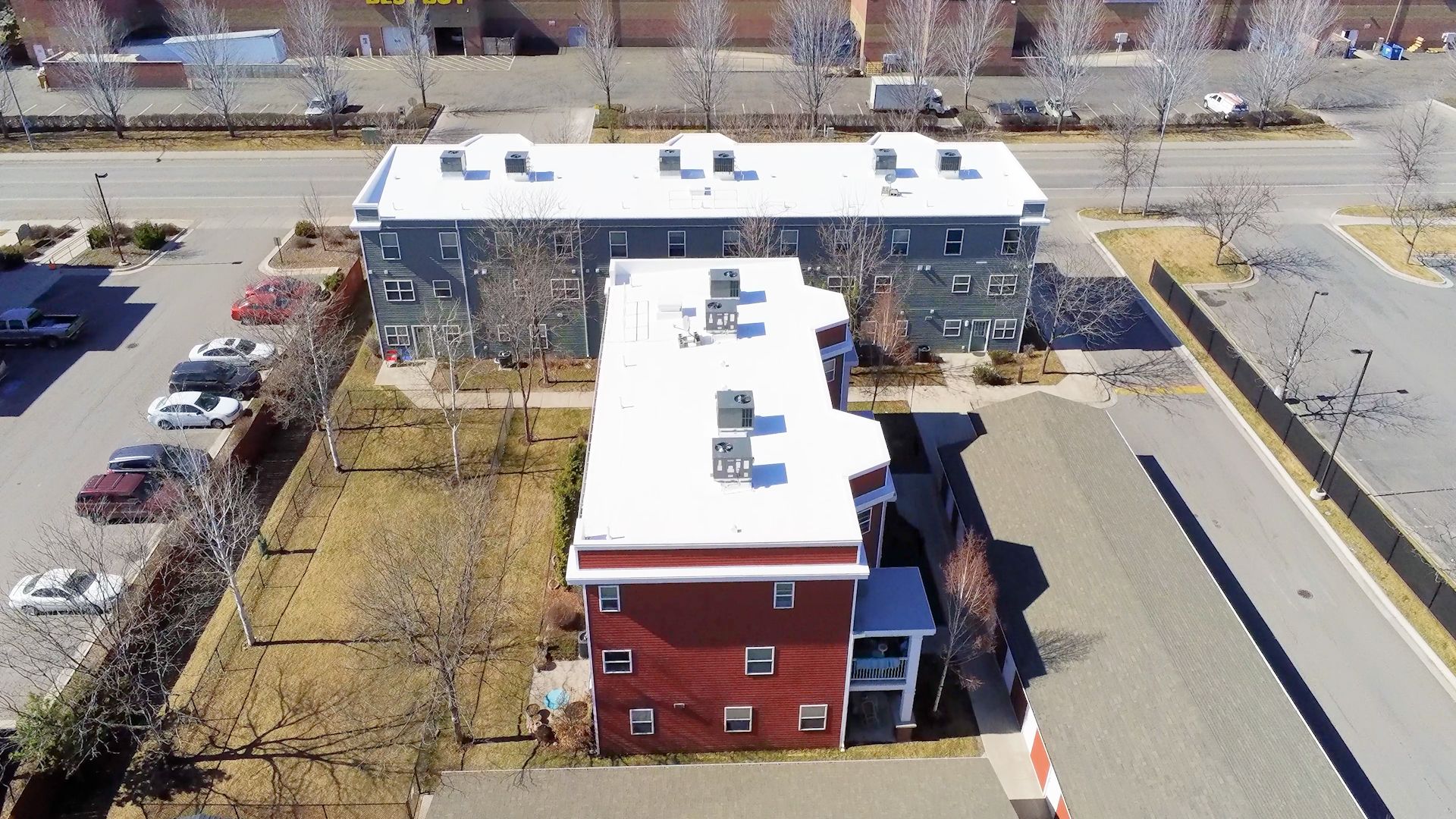
Union Place covered about 28,000 sq ft across five buildings and used infrared drone imaging to locate saturated areas before a reinforced spray-in-place membrane was installed. At Bitterroot Marksmanship Club, Schrock Roofing restored a failing Quonset metal roof with an acrylic system.
View Featured ProjectsCommercial Roof Coatings in Western Montana
Temperature, surface temperature, wind, dew, rain, humidity, smoke, frost, and the time needed for each coat to cure can narrow the installation window. Snow load, ice, freeze-thaw movement, ultraviolet exposure, and ponding also affect how the existing roof is evaluated and which system is considered.
We serve commercial properties in Missoula, Victor, Hamilton, Ravalli County, Lolo, Florence, Frenchtown, the Bitterroot Valley, and nearby Western Montana communities. Availability depends on location, roof access, weather, service scope, and scheduling.
Related Commercial Roofing Services
Straight Answers About Roof Coatings
No. The existing roof must be stable, adequately attached, repairable, and compatible with the proposed system. Broad moisture, widespread failure, deteriorated decking, major attachment problems, or incompatible materials may require a different scope.
A properly qualified and installed coating system can waterproof the restored roof surface, but active failures must be traced and repaired first. Coating over an unresolved leak can trap moisture and hide the real problem.
The coating is the fluid-applied protective material. Restoration is the complete scope that may include inspection, moisture evaluation, removal of wet areas, repairs, preparation, reinforcement, coating installation, documentation, and a maintenance plan.
There is no single best product for every roof. Acrylic, silicone, urethane, and other systems handle weather, ponding, traffic, adhesion, dirt pickup, repairs, and future recoating differently. The existing roof and project requirements should drive the choice.
Often, yes, when the panels and structure are serviceable. Rust, loose or backed-out fasteners, open seams, failed closures, damaged panels, and moving transitions must be addressed within the coating scope.
Service life depends on the product, installed thickness, preparation, roof condition, drainage, weather exposure, traffic, maintenance, and whether repairs are completed promptly. The written manufacturer and contractor documents should define the actual warranty and maintenance requirements.
Many coating systems are designed to be renewed, but the existing coating must still be adhered, cleanable, repairable, and compatible with the new material. Inspection, preparation, testing, and any required primer still come first.
No. A coating follows the roof’s existing shape and does not create positive drainage. Drains, scuppers, low areas, structural deflection, insulation slope, and ponding exposure must be evaluated separately.
Schrock Roofing Inc. • Missoula & Victor, Montana
Tell us what type of roof you have, where it has leaked, and what repairs or coatings have already been installed. We’ll inspect the roof, explain whether it qualifies, and define the work required before any coating is applied.