Existing Roof System
We identify the membrane, metal, coating, insulation, deck, attachment, existing layers, and earlier repairs. The proposed restoration materials must work with what is already there.
We inspect the existing roof, identify trapped moisture and failed areas, and determine whether restoration can reliably extend its service life. If the roof is not a good candidate, we’ll explain why replacement makes more sense.
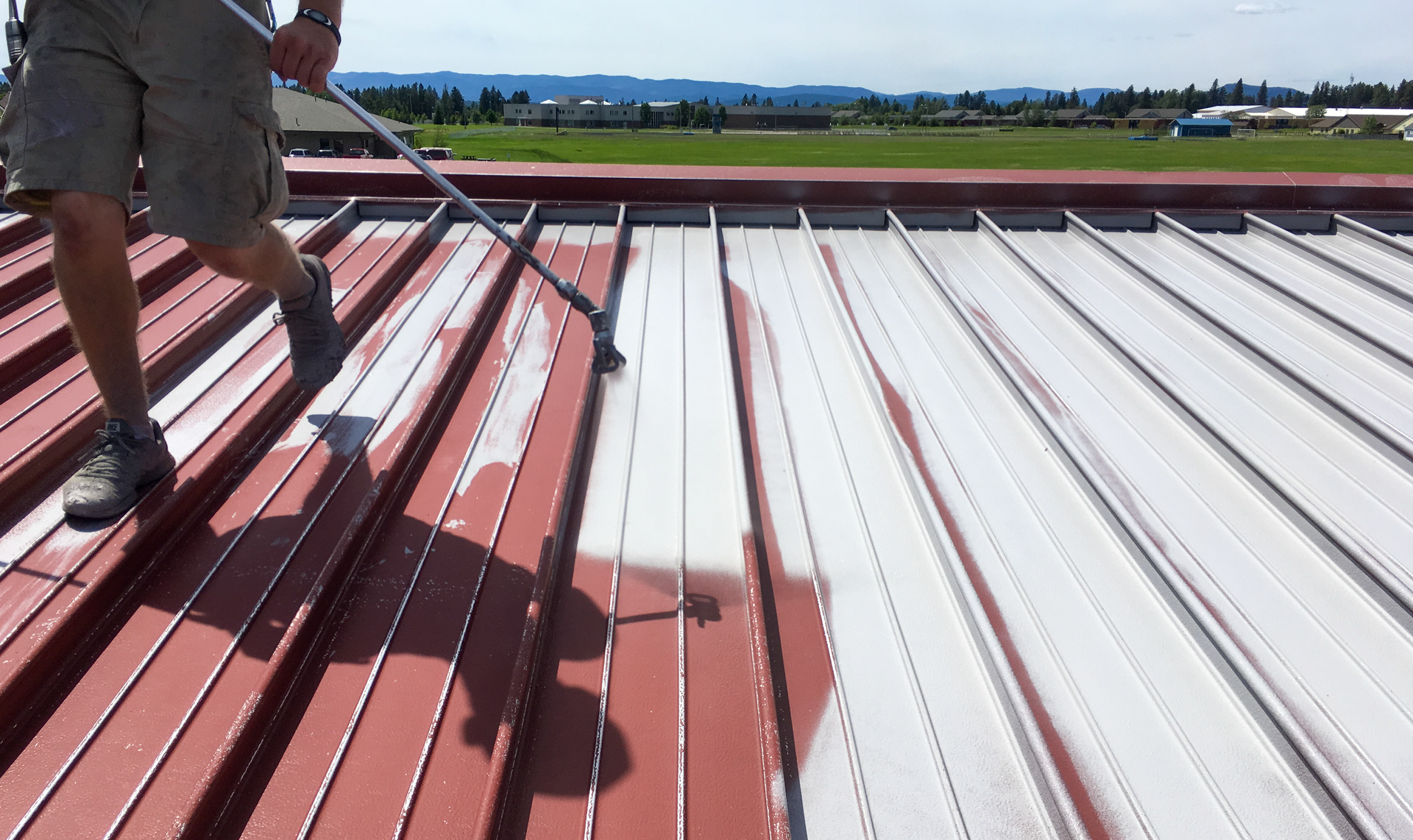
Commercial roof restoration involves more than applying a coating. We qualify the roof first, complete the necessary repairs, reinforce vulnerable seams and details, and install a compatible restoration system designed for the existing assembly.
Restoration Starts With Qualification
Commercial roof restoration can extend the useful life of the right roof, but only after we determine what is still serviceable. We identify the existing system, inspect seams and details, look for trapped moisture, review drainage, and check whether the surface can accept the proposed materials.
If localized areas are wet or damaged, they may be removed and repaired before restoration begins. If moisture is widespread, the deck is unsound, the roof is poorly attached, or the existing materials are incompatible, restoration may be the wrong investment.
We will not recommend coating over a problem just because restoration costs less than replacement. The roof has to support the work and give the owner a reasonable next service period.
Is the Existing Roof a Candidate?
No single inspection item decides the answer. We look at the roof as an assembly and determine whether the problems can be corrected without hiding larger failures.
We identify the membrane, metal, coating, insulation, deck, attachment, existing layers, and earlier repairs. The proposed restoration materials must work with what is already there.
We look for signs of water below the surface and define how far it has traveled. Localized wet materials may be replaced. Widespread moisture can change the recommendation.
Open laps, backed-out fasteners, failed sealants, damaged flashings, and repeat leak areas have to be repaired—not buried under a field coat.
Oxidation, dirt, oils, biological growth, loose coating, and other contamination affect cleaning, preparation, primer selection, and whether the new system will bond.
Drains, scuppers, gutters, low areas, snow paths, and standing water can shorten the life of a restoration. Some drainage problems need correction before the roof is renewed.
The deck and existing roof must be stable enough to remain. Corrosion, deterioration, movement, loose components, or poor attachment can take restoration off the table.
Start With the Roof You Have
Choose the system closest to yours. Each one requires different repairs, preparation, reinforcement, and compatibility checks.
Metal restoration commonly addresses corrosion, exposed fasteners, panel laps, ridge and eave details, penetrations, closures, gutters, sealants, and movement. Serviceable panels can often remain while failed details are corrected and the roof receives a compatible protective system.
Thermoplastic membranes require a close look at age, surface condition, welded seams, repairs, contamination, movement, moisture, drainage, and product approval. The membrane must be repaired and properly prepared before a compatible restoration system is applied.
EPDM restoration depends on the condition of the rubber, seams, flashings, adhesives, repairs, and insulation below. Oxidation, shrinkage, ballast, moisture, primer, and compatibility all affect how the roof must be prepared.
These asphalt-based roofs require evaluation of laps, splits, blisters, surfacing, asphalt bleed, flashings, moisture, and drainage. Loose aggregate or damaged surfacing must be handled before primer, repairs, and the field system are installed.
An existing spray-foam roof may be renewed when the foam remains sound enough to retain. Damaged, exposed, cracked, blistered, or wet foam must be removed or repaired before the protective coating is restored to the specified coverage.
A coated roof is not automatically ready for another coat. We identify the existing material, inspect adhesion and wear, look for moisture and failed details, and determine whether the roof needs limited maintenance, broader restoration, or replacement.
What the Work Includes
The visible finish is only one part of the job. The work below it is what gives the restoration a chance to perform.
We identify which roof sections qualify, which materials can remain, and which wet or failed areas need to be removed before restoration begins.
We correct splits, punctures, failed laps, damaged panels, blisters, loose fasteners, poor patches, and other defects with materials suited to the roof.
We reinforce seams, penetrations, drains, curbs, walls, edges, skylights, and transitions for the selected system.
We remove or treat dirt, oxidation, oils, loose material, biological growth, and failed coating so primer and restoration materials can bond.
We install primer, base materials, reinforcement, and field coats at the specified coverage. This is not a cosmetic pass over the roof.
We review details, coverage, repairs, transitions, drains, cleanup, and the written next steps for inspection, maintenance, and future renewal.
Do Not Force the Roof Into One Answer
Restoration is one option—not the automatic answer. We compare the paths the existing roof can actually support.
Repair fits when failures are isolated, surrounding materials remain serviceable, and compatible work can restore the affected details.
Restoration fits when the roof can remain in place after wet areas and defects are corrected, the surface is prepared, and the complete system is installed.
A recover adds a new roof over the existing assembly only when the deck, layers, moisture, added weight, attachment, drainage, and requirements support it.
Replacement makes more sense when moisture, deterioration, repeated failure, poor attachment, incompatible layers, or deck conditions make retention unreliable.
How We Build the Restoration Scope
We identify the system, layers, failures, drainage, access, rooftop equipment, and the building areas below.
We define suspected wet areas and determine whether localized removal or a broader scope is needed.
We review the surface, preparation, adhesion, repair materials, primer, and restoration system.
We correct failed areas, reinforce details, prepare the roof, and install the specified field system.
We inspect the completed roof and document the work, coverage, maintenance needs, and next responsibilities.
What Shapes the Project
Square footage matters, but it does not tell the whole story. The amount of corrective work and the system the roof requires usually decide the real scope.
Wet insulation, damaged membrane or panels, corrosion, poor patches, open seams, failed flashings, and drainage problems increase the work required before restoration.
Cleaning, removal of loose materials, primer, adhesion testing, wet-area replacement, fastener correction, and detail reinforcement all affect labor and materials.
The selected primer, reinforcement, number of coats, coverage rate, installed thickness, detail materials, and warranty terms affect the project price.
Roof access, lifts, staging, occupied areas, public entrances, inventory, equipment, tenant schedules, and restricted work windows change how the work is planned.
Curbs, pipes, drains, skylights, walls, edges, gutters, seams, slopes, and transitions add detail work beyond the open field of the roof.
Temperature, wind, rain, snow, surface moisture, and cure requirements affect scheduling and the safe installation windows available for the selected materials.
Commercial Roof Restoration in Western Montana
Commercial roof restoration depends on the right surface and weather conditions. Temperature, wind, rain, overnight moisture, snow, and cure time can affect preparation and installation. We plan the work around the selected system’s requirements instead of forcing the roof into a bad weather window.
We serve commercial properties in Missoula, Victor, Hamilton, Ravalli County, Lolo, Florence, Frenchtown, and nearby Western Montana communities. Access, building use, roof condition, and project size all affect scheduling.
Occupied buildings need another layer of planning. We coordinate roof access, staging, entrances, rooftop equipment, tenant needs, interior protection, odors, noise, and work areas so the scope accounts for what is happening below the roof.
Related Commercial Roofing Services
Straight Answers About Roof Restoration
Commercial roof restoration renews a qualified existing roof after failed areas are repaired. The work can include moisture investigation, wet-area removal, seam and flashing repairs, surface preparation, primer, reinforced details, field coats, inspection, and written maintenance requirements.
No. A coating is one material within some restoration systems. A complete restoration begins by qualifying the roof, correcting damage and wet areas, preparing the surface, reinforcing vulnerable details, and then installing the specified field system.
The roof must be inspected. We identify the existing system and layers, check moisture, examine the deck and attachment, evaluate seams and flashings, review drainage, and confirm whether the proposed materials can bond to the prepared surface.
Widespread trapped moisture, an unsound deck, unstable or poorly attached materials, severe deterioration, incompatible surfaces, too many existing layers, unresolved drainage problems, or a repair scope that approaches replacement can make restoration the wrong choice.
Restoration does not dry out or repair wet insulation. Wet materials must be located and removed where practical. If moisture is widespread or cannot be reliably defined, the roof may require a different scope.
Often, yes—when the panels, deck, and attachment remain serviceable. Fasteners, seams, laps, corrosion, penetrations, sealants, closures, gutters, and movement still need to be evaluated and corrected before the field system is installed.
Many buildings remain occupied, but the answer depends on access, staging, entrances, rooftop equipment, interior sensitivity, odors, noise, safety requirements, and the work being completed. We build those conditions into the plan before work starts.
There is no honest single number for every roof. The next service period depends on the existing assembly, repairs, system installed, coverage and thickness, drainage, weather exposure, rooftop traffic, maintenance, and written project terms. We explain the expected care and renewal plan for the specific roof.
Schrock Roofing Inc. • Missoula & Victor, Montana
Tell us what the roof is doing, what system you believe is installed, and what decision the property needs to make. We’ll inspect the existing assembly and explain whether repair, restoration, recover, or replacement fits what we find.