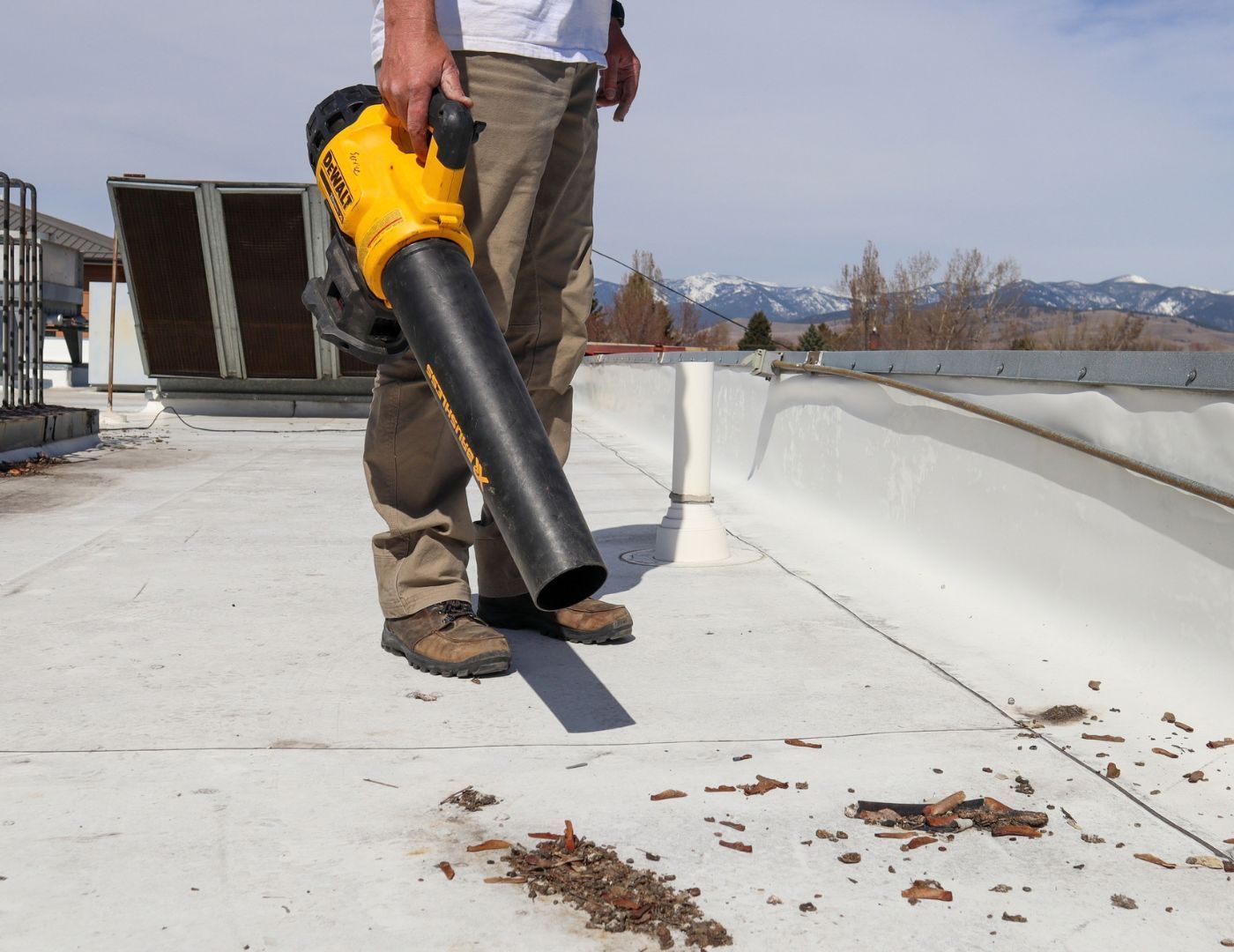

01
Surface and Seams
Track missing, cracked, lifted, punctured, corroded, open, or displaced materials and changes at laps, seams, coatings, and exposed fasteners.

Understand what to inspect, document, clean, repair, and monitor so routine care supports the roof system instead of hiding active problems.
Maintenance is not a substitute for repair. Wet, open, loose, damaged, or incompatible conditions should be evaluated before routine care continues.
Maintenance Is Condition Management
Roof maintenance is not a promise that every leak or material failure can be prevented. It is a disciplined way to watch drainage, edges, flashings, penetrations, surface condition, ventilation concerns, and changes after weather or rooftop work.
The useful starting point is a documented baseline. Identify the roof system, age, known repairs, warranty requirements, drainage layout, access limitations, recurring snow or debris areas, and any interior symptoms. Then compare future observations to that record instead of treating every visit as a disconnected snapshot.
Start With the Current Situation
Review visible surface condition, edges, drainage, flashings, penetrations, sealants, fasteners, rooftop equipment, and interior areas below the roof. The interval should fit the roof system, age, written warranty requirements, weather exposure, prior problems, and building use—not a generic calendar alone.
Record the date, wind, hail, fallen debris, displaced roofing, damaged metal, clogged drainage, and new interior symptoms from safe locations. Do not climb onto a wet, icy, damaged, or steep roof. Visible damage or moisture calls for a professional assessment, not a maintenance checklist.
Uneven accumulation, drifting, sliding snow, blocked drainage, ice at eaves, and water backing beneath roofing can create different hazards. Do not chip ice, use unapproved chemicals, or improvise rooftop snow removal. The roof system, structure, access, fall exposure, and discharge area must guide the response.
Gutters, downspouts, scuppers, drains, valleys, crickets, and low areas must remain open and discharge where the building can handle the water. Persistent ponding, overflow, staining, erosion, or ice may point to slope, capacity, settlement, or detail problems that cleaning alone will not fix.
HVAC, electrical, solar, plumbing, chimney, satellite, and other work can add penetrations, traffic, dropped fasteners, displaced panels, or incompatible sealants. Document who accessed the roof and have new curbs, penetrations, flashings, fasteners, and traffic paths evaluated.
Ceiling stains, damp insulation, odors, frost, peeling finishes, or repeated condensation are no longer routine upkeep. Record when and where the symptom appears, recent weather, and nearby roof features. Water can travel before it becomes visible, so the interior location may not identify the entry point.
A Practical Baseline
Track missing, cracked, lifted, punctured, corroded, open, or displaced materials and changes at laps, seams, coatings, and exposed fasteners.
Watch eaves, rakes, walls, valleys, chimneys, skylights, transitions, counterflashing, terminations, and places where materials change.
Record vents, pipes, curbs, equipment, mounts, boots, pitch pockets, sealants, and any new opening made after installation.
Check gutters, downspouts, drains, scuppers, valleys, crickets, low areas, discharge points, overflow evidence, and recurring ice.
Log stains, dampness, frost, odors, damaged insulation, condensation patterns, ventilation changes, and the weather tied to each symptom.
Track rooftop traffic, other trades, snow work, cleaning, repairs, new equipment, impact events, and who changed the assembly.
Safety Changes the Scope
Use ground-level views, windows, interior rooms, accessible attic areas, dates, weather notes, and photographs without stepping onto the roof.
Avoid steep, wet, icy, fragile, damaged, or snow-loaded roofs. Do not pressure-wash roofing, chip ice, or smear sealant over an unknown failure.
Roof walking, testing, opening assemblies, clearing risky drainage, snow removal, membrane work, and repair should be planned around the actual hazards.
Document the condition before permanent changes. Emergency protection may be necessary, but unexplained alterations can hide the original failure.
Montana Maintenance Rhythm
From Observation to Action
Record the roof system, age, known repairs, warranty terms, drainage, access, and recurring problem areas.
Create dated exterior, interior, attic, drainage, flashing, penetration, and equipment observations.
Separate routine housekeeping from safety hazards, active moisture, damaged materials, and conditions needing investigation.
Plan access, other trades, weather, occupants, protection, testing, and any required manufacturer or warranty notice.
Complete the approved maintenance or repair scope with compatible materials and controlled roof access.
Keep findings, before-and-after photos, materials, invoices, recommendations, limitations, and open items together.
Compare the roof after weather, seasonal transitions, equipment work, repeat symptoms, and future inspections.
Move from maintenance to repair, restoration, or replacement when failure is active, repeated, widespread, or no longer economical.
Direct Answers
There is no single interval for every roof. System type, age, condition, warranty requirements, weather exposure, drainage, rooftop traffic, building use, and prior failures should determine the schedule. Post-storm and post-trade reviews may be needed between planned inspections.
Owners can record dates, weather, interior symptoms, attic observations where safely accessible, and exterior conditions visible from the ground or windows. Roof walking, snow removal, opening materials, membrane work, steep-slope cleaning, and repair belong to qualified professionals.
Yes. Weather, debris, drainage, sealants, fasteners, foot traffic, equipment work, new penetrations, ventilation changes, and owner maintenance duties can affect a roof at any age. Follow the actual system and warranty documents.
Document significant weather and safe observations. Request a professional assessment when there is visible displacement, impact damage, debris, drainage blockage, damaged metal, interior moisture, or a material change from the baseline.
Not by itself. Ice can involve heat loss, ventilation, insulation, air leakage, roof geometry, shade, snow, drainage, and weather. Clearing drainage or snow may address part of the risk, but the recurring cause must be evaluated before claiming a permanent solution.
Other trades can add penetrations, curbs, mounts, traffic, dropped hardware, incompatible sealants, or displaced roofing. A dated access record helps identify what changed and supports a targeted review afterward.
Maintenance becomes repair when materials or details have failed and require corrective work. Active leaks, open seams, failed flashings, punctures, displaced roofing, wet insulation, damaged decking, and recurring drainage or ice problems need a defined repair or broader evaluation.
Keep roof plans and system information, warranties, inspection reports, dated photos, weather and leak logs, maintenance and repair invoices, product records, correspondence, rooftop access records, insurance documents, and unresolved recommendations.
Missoula & Victor, Montana
Send Schrock Roofing the property address, roof type if known, photos, recent weather, interior symptoms, prior work, and the maintenance record. That gives the assessment a better starting point than a vague request to “check the roof.”
Request a Roof Assessment