Commercial Roofing by Building Type • Missoula & Victor

Commercial Roofing for Businesses, Multi-Family Properties & Facilities

A warehouse, apartment building, church, school, medical office, and retail property do not face the same consequences when a roof leaks. We start by learning what happens inside the building, what must remain accessible, and what cannot be interrupted. Then we inspect the roof and build the scope around the evidence we find.

Choose the building type closest to yours to see the conditions we account for when planning inspection, repair, maintenance, restoration, or replacement work.

Roof-First Advice We recommend the work the roof actually needs
Full-Service Inspection, repair, maintenance, restoration, and replacement
Local Support Commercial roofing from our Victor and Missoula locations
Clear Records Photos, findings, scope, and closeout information

The Same Leak Can Create a Very Different Problem

We Plan the Roof Work Around the Building Below It

Water over warehouse inventory is not the same problem as water entering an apartment, classroom, treatment room, restaurant kitchen, sanctuary, municipal office, or production area. The roof still has to be diagnosed correctly, but the use of the building changes how quickly we respond and how the work must be planned.

Before we recommend a repair or larger project, we identify the roofing system, trace the likely moisture path, inspect the surrounding roof, and learn what must keep running below. Tenants, customers, equipment, inventory, security, interior finishes, deliveries, and work schedules can all affect access, protection, phasing, and timing.

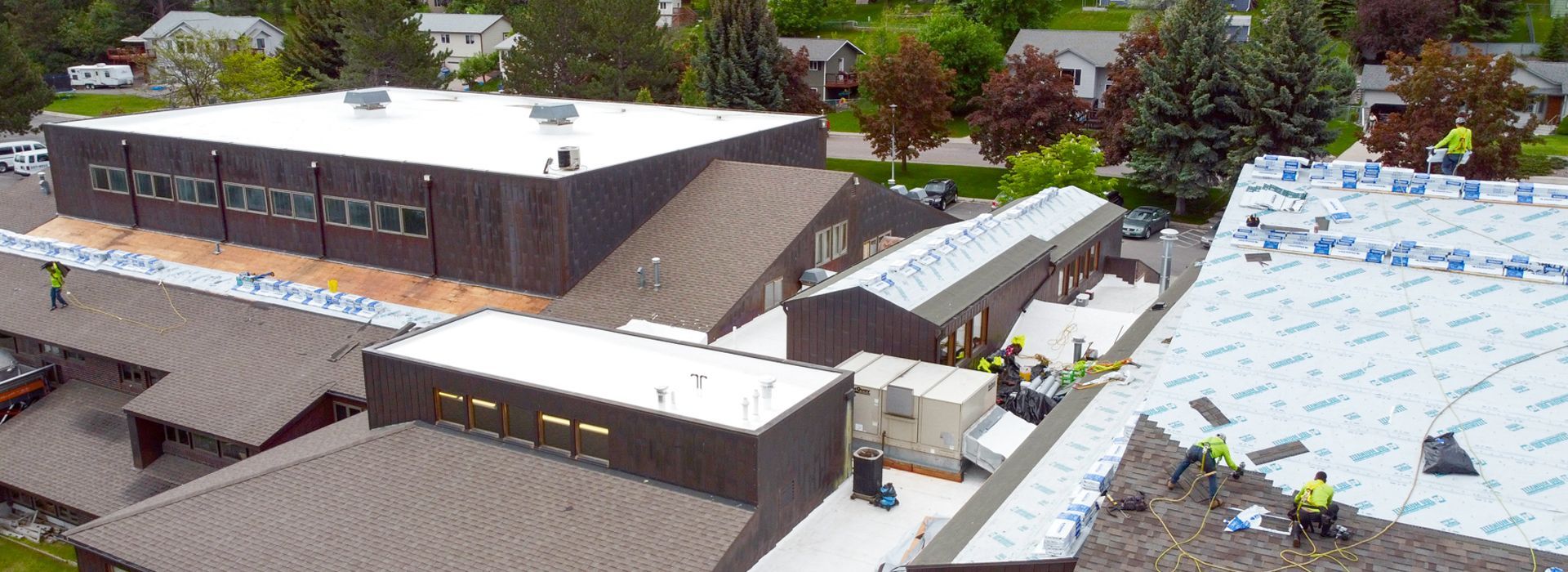
We inspect, repair, maintain, restore, and replace commercial roofs throughout Missoula, Victor, the Bitterroot Valley, and nearby Western Montana communities. We also work with single-ply and metal systems, annual service plans, and thermal drone imaging when the roof and the decision call for it.
Choose the Closest Property Type

Commercial Roofing for the Building You Actually Operate

No two properties run exactly alike. Choose the closest match below. If your building combines several uses, we plan around each occupied or working area.

Warehouse & Industrial

Protect inventory, equipment, and production

Large roof areas, loading zones, exhausts, utilities, rooftop equipment, restricted spaces, stored goods, and shutdown windows all belong in the plan. We identify where water is entering, what areas carry the highest consequence, and how crews can work without creating a second problem below.

What we account for

  • Production schedules and shutdown limits
  • Inventory, machinery, and electrical exposure
  • Exhausts, penetrations, and rooftop traffic
  • Staging, loading access, and large roof zones
Retail & Hospitality

Keep entrances, customers, and daily business in the plan

Retail buildings, restaurants, lodging properties, and other public-facing facilities need careful control of entrances, walkways, odors, debris, deliveries, parking, kitchen exhausts, and guest areas. We plan the work around the parts of the day and property that cannot be blocked.

What we account for

  • Safe public access and clear entrances
  • Deliveries, parking, and peak business hours
  • Kitchen exhausts and sensitive air intakes
  • Interior protection above finished spaces
Office & Medical

Plan around occupied rooms and sensitive work

Offices, clinics, and treatment spaces may have limited work windows, controlled areas, valuable equipment, records, and low tolerance for noise, dust, or water. We confirm access rules and interior risks before opening the roof or staging materials.

What we account for

  • Patients, staff, visitors, and safe egress
  • Restricted rooms and interior equipment
  • Noise, odor, dust, and air-intake locations
  • Security, escorts, and work-hour limits
Schools & Churches

Work around classes, services, events, and public access

Schools, churches, and community buildings often combine steep and low-slope roofs, busy entrances, limited work windows, and spaces that must remain available. We plan around the calendar, protect occupied areas, and keep communication clear as the work moves.

What we account for

  • Classes, services, events, and child safety
  • Entrances, drop-off areas, and walkways
  • Mixed slopes, masonry, and older details
  • Snow movement and limited shutdown windows
Apartments & HOAs

Coordinate the roof work across residents and decision-makers

Multi-family properties add resident notices, parking, interior access, board approvals, property management, repeated building types, and long-term reserve planning. We define the roof conditions and scope clearly so owners and boards can make the same decision from the same information.

What we account for

  • Resident notices and interior access
  • Parking, walkways, pets, and daily routines
  • Consistent scopes across buildings
  • Board review, phasing, and reserve planning
Municipal & Agricultural

Build the scope around public duties or rural operations

Public buildings may require approval records, secure access, and uninterrupted services. Agricultural and rural commercial properties bring different concerns, including animals, stored products, dust, ventilation, equipment, access, and travel. We evaluate the actual property before committing to the scope or schedule.

What we account for

  • Public access, approvals, and secure areas
  • Animals, stored products, and ventilation
  • Equipment, dust, utilities, and staging
  • Rural access, weather, and mobilization

Before We Recommend the Work

We Look at the Roof and What It Must Protect

Leak and Roof History

We review active leaks, earlier repairs, storm dates, known alterations, warranty information, and any areas that keep failing.

Roof Assembly

We identify the membrane or metal system, slope, deck, insulation, drainage, flashings, penetrations, seams, edges, and visible moisture evidence.

People and Property

We locate occupied rooms, inventory, equipment, public areas, tenants, records, and other spaces that need added protection.

Access and Schedule

We confirm roof access, staging, deliveries, parking, security, work-hour limits, rooftop equipment, and operating windows.

Commercial Roof Systems

The Existing Roof Still Decides What Work Is Possible

Building use matters, but it does not choose the roofing system by itself. We inspect the assembly before deciding whether repair, maintenance, restoration, recover, or replacement belongs on the table.

Single-Ply Roofing

TPO, PVC, and EPDM systems each have different seam, flashing, attachment, compatibility, drainage, and repair requirements.

Metal Roofing

Standing-seam and exposed-fastener roofs move and age differently. Panels, fasteners, seams, coatings, curbs, edges, and penetrations all need to be checked.

Asphaltic Systems

Modified bitumen and built-up roofs require inspection of laps, flashings, surfacing, blisters, drainage, moisture, and previous repair materials.

Mixed and Pitched Roofs

Churches, apartments, offices, and community buildings may combine shingles, metal, membrane, walls, valleys, and low-slope transitions in one assembly.

How We Plan Commercial Roof Work

From the First Review to Clear Closeout Records

Start With the Problem

We learn what the roof is doing, what is at risk below, and what decision the owner needs to make.

Review the History

We collect available plans, warranties, repair records, leak locations, alterations, and earlier inspection information.

Inspect the Roof

We inspect the system and details, trace likely moisture paths, and connect roof findings to interior conditions.

Build the Scope

We explain what can be repaired, what needs monitoring, and when restoration, recover, or replacement makes more sense.

Plan the Work

We coordinate access, safety, interior protection, staging, phasing, weather, tenants, and operating schedules.

Document the Result

We close out the work with the photos, records, warranty information, and next roof-care responsibilities included in the agreed scope.

Choose the Work From the Evidence

Repair, Maintain, Restore, Recover, or Replace?

We do not force a larger project than the roof needs. We compare the available paths, explain the limits, and show what supports the recommendation.

Repair

We repair when the failure is isolated, compatible materials are available, and the surrounding roof remains serviceable.

Maintain

We maintain drainage, sealants, flashings, penetrations, and traffic areas so small defects can be addressed before they spread.

Restore or Recover

We restore or recover only when the existing assembly, moisture conditions, attachment, details, and manufacturer requirements support it.

Replace

We replace when failure is widespread, moisture extends through the assembly, repairs no longer hold, or the roof cannot support another system.

What Changes Commercial Roofing Cost?

Roof Conditions and Building Operations Both Affect the Price

Assembly and Moisture

Roof area, system, layers, insulation, deck condition, wet materials, drainage, details, and removal requirements affect labor and quantities.

Interior Consequence

Sensitive rooms, inventory, residents, customers, electronics, records, and production can require more protection and coordination.

Access and Equipment

Roof height, cranes, staging, parking, rooftop units, utilities, exhausts, and limited access change how the work can be completed.

Phasing and Schedule

Occupied areas, shutdown limits, restricted hours, approvals, inspections, weather, and daily dry-in requirements affect the schedule.

Relevant Work Matters More Than Generic Claims

Commercial Projects and Experience

Missoula Detention Center

97,000 sq ft | Municipal | 80-mil IB PVC | Occupied secure facility

Schrock Roofing replaced a failing Stephens EP membrane, installed new parapet cap, and replaced damaged or wet cover board while planning around a secure, occupied facility. The project carries 30-year warranty coverage.

Missoula Alliance Church

28,260 sq ft | Active congregation | Malarkey shingles + 60-mil Carlisle TPO

The mixed-slope reroof coordinated pitched and flat roof areas, prior flat-roof leaks, and ice-dam leakage at shingle eaves while the church remained active.

Commercial Roofing in Western Montana

Local Support From Missoula and Victor

Our Missoula and Victor locations support commercial roof inspections, repairs, planned maintenance, restoration, and replacement for occupied properties in both markets.

We also evaluate work in Hamilton, Lolo, Florence, Frenchtown, the Bitterroot Valley, Ravalli County, and nearby Western Montana communities. Scheduling depends on the roof condition, project scope, access, weather, travel, and what the building needs to keep operating.

Areas We Commonly Evaluate

  • Missoula, MT
  • Victor, MT
  • Hamilton and Ravalli County
  • Lolo and Florence
  • Frenchtown
  • Bitterroot Valley and nearby Western Montana communities

Answers for Owners and Property Teams

Commercial Roofing by Building Type FAQs

What types of commercial buildings do you work with?

Our completed work includes multi-family, church, municipal, and community facilities. We also evaluate industrial, warehouse, retail, hospitality, office, medical, school, HOA, agricultural, and rural commercial properties. We confirm fit and availability after reviewing the actual property and scope.

Can a business stay open during commercial roof work?

Often, yes. The answer depends on active water, interior hazards, access, noise, odor, debris, air intakes, public areas, tenants, production, deliveries, parking, weather, and the selected roofing work. We identify those limits before finalizing the plan.

Can you schedule work around tenants, customers, classes, or production?

We can often phase or coordinate work around the facility schedule. The workable options depend on scope, materials, temperature limits, equipment, inspections, safe access, weather, and the building’s actual operating windows.

How do you protect inventory or sensitive interiors?

The plan can include interior protection, monitoring, phased openings, temporary dry-in, controlled staging, restricted work zones, weather planning, and clear communication. The exact protection depends on what is below the roof and the work being completed.

Does every building type need a different roofing material?

No. Building use affects risk and operations, but system choice also depends on slope, deck, moisture, insulation, drainage, wind, snow, chemicals, traffic, existing layers, roof details, budget, warranty requirements, and how long the owner plans to hold the property.

Can you help prioritize roofing across several buildings?

Yes. A consistent assessment can compare roof zones, condition, leak history, moisture evidence, immediate repair needs, maintenance opportunities, restoration eligibility, and replacement timing across the properties.

What information should I have before requesting an assessment?

Share the property address, building use, known roof system, leak and repair history, approximate size, roof access, rooftop equipment, interior areas at risk, operating restrictions, available plans or warranties, and the decision ownership needs to make.

Where do you provide commercial roofing service?

We provide commercial roofing from our Missoula and Victor locations. We also evaluate planned work in Hamilton, Lolo, Florence, Frenchtown, the Bitterroot Valley, Ravalli County, and nearby Western Montana communities based on scope, access, weather, travel, and scheduling.

Schrock Roofing Inc. • Missoula & Victor, Montana

Start With the Building, the Roof, and the Decision You Need to Make

Tell us what the building does, what the roof is doing, what cannot be interrupted, and what information you need from the assessment. We’ll start with the roof conditions and explain the next practical step.