
Close off wet floors, electrical exposure, sagging ceilings, and falling-debris areas.
Commercial Storm Damage • Missoula & Victor
Commercial Storm Damage Roofing
We help commercial owners stabilize active roof damage, document conditions, separate emergency work from permanent repairs, and define a roof scope that can be reviewed with the insurer.
Active water entry or exposed roof materials? Request service. Unsure whether wind, hail, snow, ice, or debris damaged the assembly? Start with a documented assessment.
Roof-First Advice
Options based on what the roof actually needs
Full-Service
Inspection, repair, maintenance, restoration, and replacement
Local Support
Victor and Missoula commercial roofing service
Clear Closeout
Photos, warranty documents, and project records included in the work
Control the Water. Then Diagnose the Roof.
A Storm Date Does Not Tell Us Which Part of the Roof Failed
Wind, hail, snow, ice, falling limbs, and displaced rooftop equipment can damage a commercial roof in very different ways. Water can travel through insulation, deck seams, walls, and penetrations before it appears inside. The visible drip is a starting point—not the repair plan.
We begin with the people, equipment, inventory, records, and occupied areas at risk. Then we inspect the roof system, trace the likely moisture path, document what changed, and separate immediate stabilization from the permanent work. We recommend repair, restoration, recover, or replacement only after the roof evidence supports it.
Water entering the building now?
Keep people away from electrical hazards and unstable ceiling materials. Protect equipment, inventory, records, and finishes when it is safe to do so. Do not climb onto a wet, icy, wind-damaged, or unfamiliar commercial roof.
Before Anyone Steps Onto the Roof
What to Do When a Commercial Roof Starts Leaking After a Storm
The first moves protect the building and preserve useful evidence. A rushed rooftop patch can hide the condition without solving it.
Move or cover inventory, equipment, records, furnishings, and sensitive finishes when safe.
Note the storm timing and photograph interior water, affected rooms, and visible exterior damage.
Don’t go up there yourself. Call us and we’ll tell you whether it’s safe to get on that roof today and what to do until someone can.
Start With What Changed
Choose the Condition Closest to Your Building
These are investigation starting points. They do not determine coverage or automatically mean the roof needs replacement.
Water is entering an occupied or operational area
We trace the likely entry path instead of assuming the roof failed directly above the drip. Interior protection and authorized temporary work come first; the permanent scope follows the investigation.
- Interior and electrical risk
- Leak-path investigation
- Temporary stabilization
- Permanent repair plan
Membrane, panels, coping, or edge metal moved
Wind pressure is often strongest at roof edges and corners. We check the affected materials, their attachment, nearby seams, perimeter details, and any path wind-driven water could have used.
- Edges and corners
- Fasteners and attachment
- Loose roof components
- Open laps and seams
Hail or wind-driven debris struck the roof
An impact mark does not mean the same thing on membrane, metal, coating, skylights, insulation, or rooftop equipment. We document the material, location, pattern, and whether the component still performs its intended job.
- Material-specific evidence
- Punctures and fractures
- Accessories and equipment
- Roof-zone photographs
Snow, ice, or freeze-thaw exposed a weak detail
Drifting, blocked drainage, ice at transitions, and concentrated meltwater can overload roof details or reveal existing drainage and flashing problems. Safe access comes before inspection.
- Drift and melt paths
- Drains and scuppers
- Eaves and transitions
- Snow-retention components
A limb or other object contacted the roof
The impact can puncture membrane, bend panels, damage deck, break a skylight, or disturb nearby seams and flashing. We inspect beyond the obvious contact point.
- Impact location
- Deck and substrate
- Nearby panels and seams
- Loose-material hazards
The building took a hard storm but no leak is visible
A post-storm assessment can document the condition of perimeters, penetrations, drainage, rooftop equipment, membrane, panels, and transitions before a small opening turns into interior water.
- Post-storm baseline
- Perimeter and detail review
- Photo documentation
- Repair priorities
The Roof Has to Support the Story
What We Inspect Before We Recommend the Work
We document both storm-related conditions and older roof problems when the evidence allows us to tell them apart. If the cause is uncertain, we say so.
Roof Field
Membrane, panels, shingles, coatings, seams, laps, fasteners, punctures, splits, impact areas, and visible movement.
Edges and Corners
Coping, edge metal, terminations, attachment, open joints, peeled materials, and wind-sensitive perimeter zones.
Flashings and Equipment
Curbs, vents, hatches, skylights, pipes, drains, screens, gas lines, and displaced equipment that may have damaged the roof.
Drainage and Snow Paths
Drains, scuppers, gutters, ponding, blocked flow, snow drift areas, ice paths, valleys, eaves, and transitions.
Moisture Below the Surface
Wet insulation, damaged cover board, deck concerns, and moisture boundaries that can make a small surface opening a larger repair.
Interior Connection
Active water, stains, damaged finishes, affected equipment, timing, and the relationship between the interior symptoms and roof zones.
Clear Roles Prevent Bad Promises
We Document the Roof. Your Carrier Decides Coverage.
We can support the construction side of a commercial storm claim without pretending to control the policy decision.
What We Handle
- Safe roof access and condition assessment
- Photographs tied to roof areas and components
- Records of authorized temporary work
- A contractor’s scope for permanent roofing work
- Construction questions during a scheduled adjuster review
- Documentation of concealed conditions found during the work
What We Do Not Decide
- Whether the policy covers the reported loss
- How the carrier interprets policy language
- The amount the carrier agrees to pay
- Whether a mark is covered because a storm occurred
- Legal or public-adjusting questions outside our roofing role
- A replacement scope unsupported by the roof condition
Do Only the Work the Roof Supports
Emergency Work, Repair, Restoration, or Replacement?
A storm does not automatically turn a repairable roof into a replacement. The decision depends on damage extent, moisture, attachment, deck condition, compatibility, and the serviceability of the surrounding assembly.
Stabilize
We stabilize when weather, safety, access, materials, or authorization prevents the final work and the building needs immediate protection.
Repair
We repair isolated punctures, seams, flashing failures, displaced parts, or limited wet areas when the surrounding roof remains dependable.
Restore or Recover
We restore or recover when the substrate qualifies, wet materials are removed, details are corrected, and the existing assembly can support the system.
Replace
We replace when damage, widespread moisture, unstable attachment, failed materials, or deck conditions make a limited scope unreliable.
Damage Looks Different by Assembly
Commercial Roof Systems We Evaluate After Storms
TPO, PVC, and EPDM
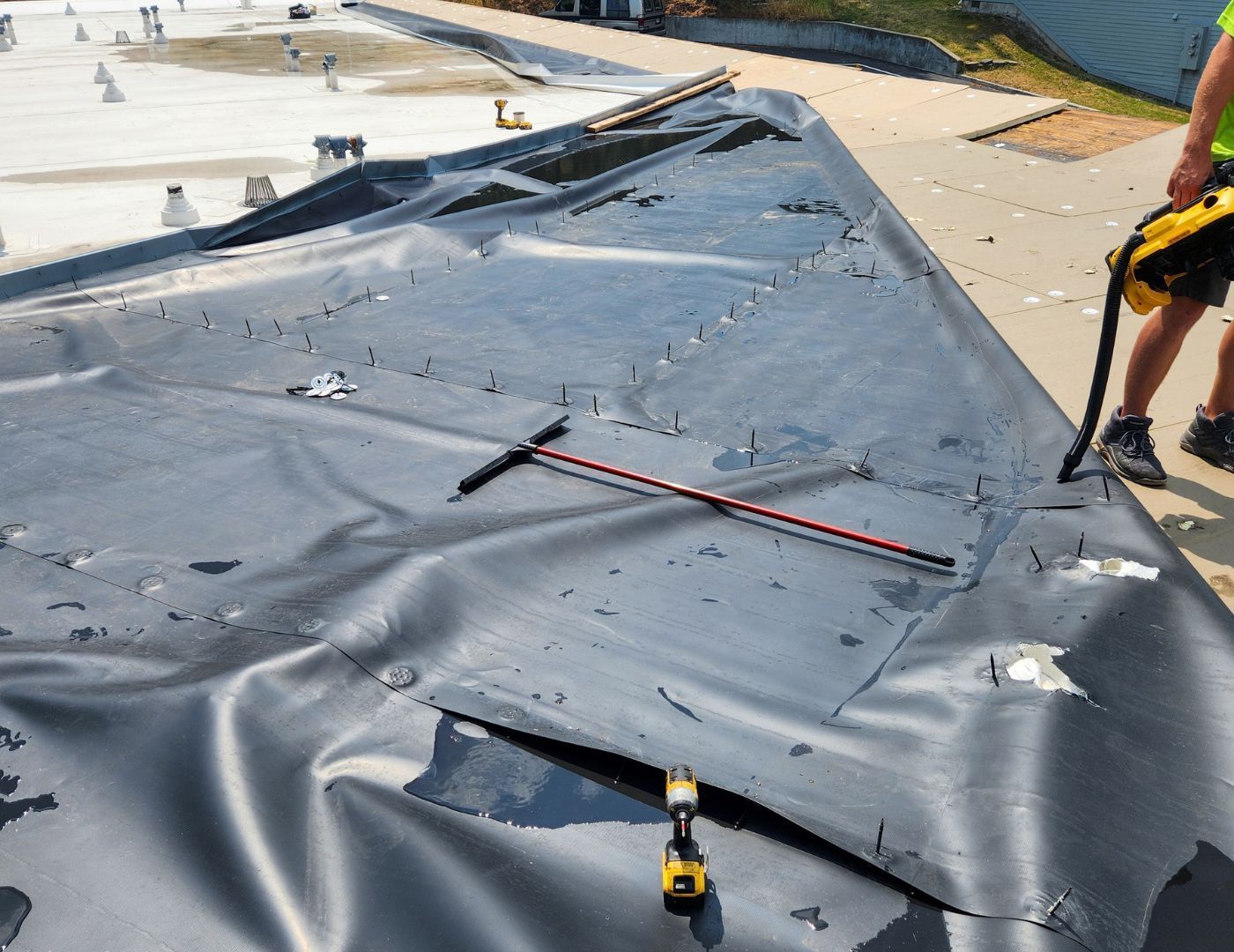
We check punctures, welded or adhered seams, attachment, edge conditions, flashings, cover board, insulation, rooftop equipment, and compatible repair requirements.
- Membrane and seam condition
- Perimeter attachment
- Moisture below the sheet
Standing-Seam and Exposed-Fastener Metal
We check panels, seams, clips, fasteners, washers, laps, closures, edge details, penetrations, snow retention, impact patterns, and wind-related movement.
- Functional versus cosmetic effects
- Fasteners and panel movement
- Flashings and transitions
Modified Bitumen, BUR, and Coated Roofs
We check splits, punctures, open laps, displaced surfacing, coating damage, adhesion, reinforced details, moisture migration, and repair compatibility.
- Surface and reinforcement
- Laps, flashings, and adhesion
- Substrate qualification
Mixed-Slope and Pitched Commercial Roofs
We trace water across shingles, metal, membrane, valleys, walls, eaves, low-slope transitions, and separate drainage zones instead of stopping at the first visible mark.
- Material transitions
- Valleys, walls, and eaves
- Snow, ice, and drainage paths
From the First Call to Closeout
How We Handle Commercial Storm Damage
Confirm the Risk
We learn where water is entering, what is exposed, what operations are affected, and whether roof access is safe.
Stabilize When Authorized
We document temporary work that reduces additional exposure or secures loose components.
Inspect and Map
We connect roof conditions, interior symptoms, moisture concerns, equipment, drainage, and older wear.
Define the Work
We separate temporary measures from permanent repair, restoration, recover, or replacement.
Complete and Record
We document finished details, materials, warranty documents, remaining conditions, and the next roof priority.
Missoula, Victor & the Bitterroot Valley
Commercial Storm Damage Service Across Western Montana
Schrock Roofing has been in this valley a long time. Victor is our main office; Missoula handles service and repair. We work across Hamilton, Lolo, Florence, Frenchtown, the Bitterroot Valley and Ravalli County, and when a storm hits we triage by who has water coming in first. Call us and we’ll tell you straight where you land and when we can be there.
When you call, tell us where the building is, what changed during the storm, whether water is entering now, what the roof protects, and whether temporary work has already been completed. We will confirm the next practical step for that property.
- Missoula
- Victor
- Hamilton
- Lolo
- Florence
- Frenchtown
- Bitterroot Valley
- Ravalli County
Related Commercial Roofing Services
Continue With the Service That Matches the Roof
Straight Answers for Owners and Facility Teams
Commercial Storm Damage FAQs
Do you repair active commercial roof leaks after a storm?
Yes, we evaluate active commercial roof leaks and determine whether temporary stabilization or permanent repair is appropriate. Timing depends on weather, safe access, materials, building conditions, and authorization, so we confirm availability for the specific property.
Is an emergency patch the permanent repair?
Not always. A tarp, temporary membrane patch, sealant, drainage relief, or secured component can reduce immediate exposure. The permanent scope still needs to address the damaged materials, wet components, attachment, details, and the actual entry point.
Does every hail mark mean the roof must be replaced?
No. We evaluate whether the impact affected waterproofing, attachment, reinforcement, coating, flashings, equipment, or the roof’s ability to perform. Cosmetic marks and functional damage are not automatically the same thing.
Can storm damage be repaired instead of replacing the roof?
Yes, when the damage is isolated and the surrounding membrane or panels, insulation, deck, attachment, flashings, and drainage remain serviceable. Widespread damage, broad moisture, or unstable attachment can make a larger scope necessary.
How do you separate storm damage from older roof wear?
We compare damage patterns, material function, roof history, prior repairs, age-related deterioration, interior timing, photographs, weather exposure, and surrounding conditions. When the cause cannot be established from the available evidence, we state the limitation instead of guessing.
Does Schrock Roofing decide whether insurance covers the roof?
No. We document roof conditions, temporary work, and the contractor’s recommended scope. The insurance carrier determines coverage under the policy. Policy interpretation belongs with the carrier or a properly licensed claims professional.
What happens if concealed damage is found after work begins?
When conditions allow, we photograph and locate the newly exposed condition before expanding the scope. Wet insulation, damaged cover board, deteriorated deck, or hidden attachment problems can change the quantities and repair method.
Where do you provide commercial storm damage service?
Schrock Roofing has been in this valley a long time. Victor is our main office; Missoula handles service and repair. We work across Hamilton, Lolo, Florence, Frenchtown, the Bitterroot Valley and Ravalli County, and when a storm hits we triage by who has water coming in first. Call us and we’ll tell you straight where you land and when we can be there.
Schrock Roofing Inc. • Missoula & Victor, Montana
Control the Damage Before a Temporary Problem Becomes a Larger Roof Failure
Tell us what happened, where water is showing up, what the building needs to protect, and whether temporary work has already been completed. We’ll start with the roof condition and explain the next practical step.