
Winter Roof Care for Missoula's Mountain-View Homes: Rattlesnake, Grant Creek & the Ranch Club
Trees, hillside wind and big rooflines each put their own kind of strain on a roof once snow and ice settle in.
Request an estimate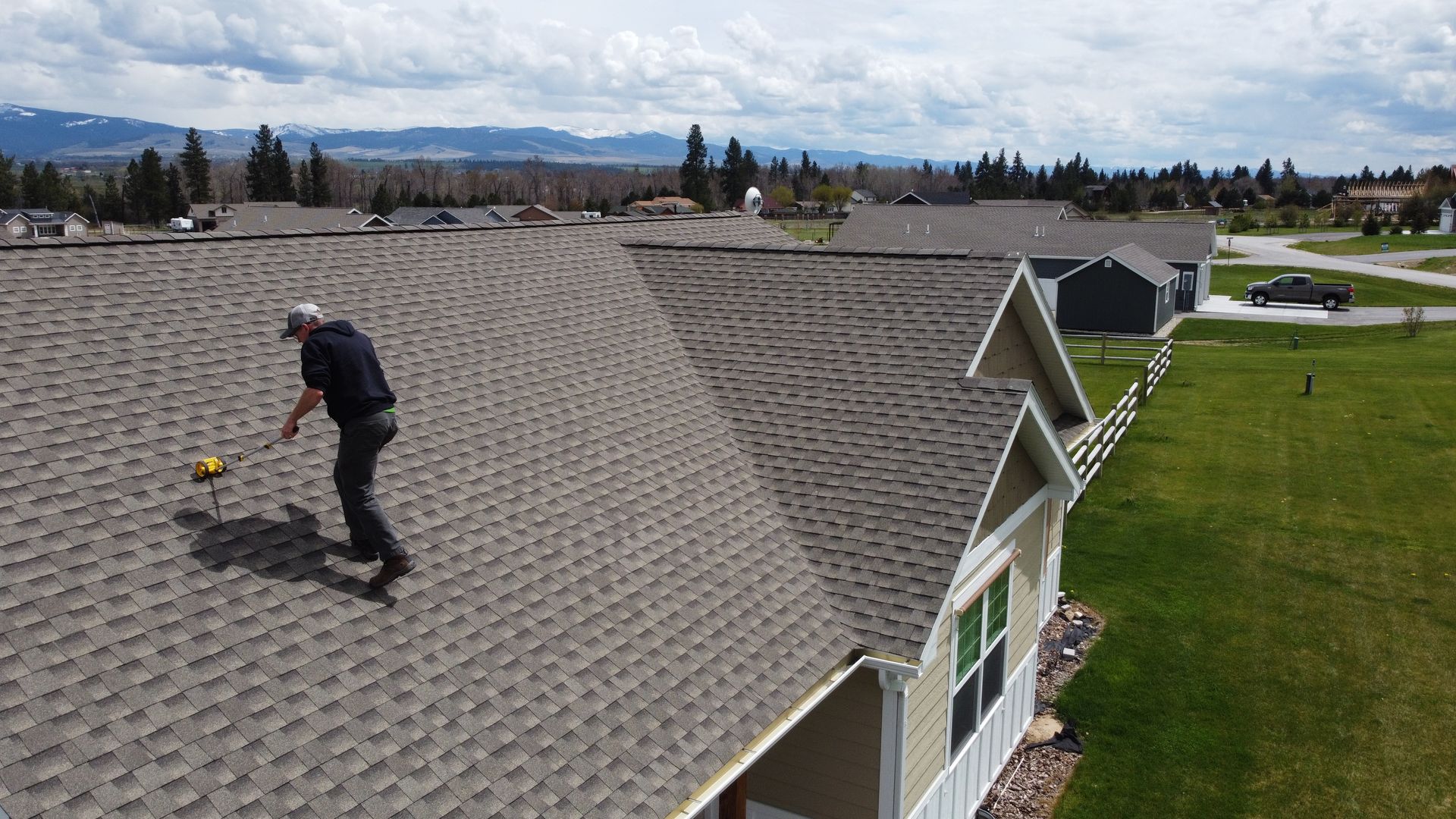
Winter roof care for view homes in the Rattlesnake, Grant Creek and the Ranch Club starts before the first lasting snow: have the roof inspected, clear the gutters and valleys, and fix small flashing or shingle problems while they're still small. Once winter sets in, the job shifts to watching the eaves, shaded slopes and wind-exposed edges, because that's where trouble usually starts on these homes.
Homes built for a mountain view tend to give something up to get it. Some sit deep in the trees, some sit on open hillsides, and some carry big, complicated roofs facing the ridges. Each setting puts a different kind of stress on a roof during a Missoula winter, so a care plan that works on one street can miss the main risk on the next.
In this guide
Your Roof's Pre-Winter Checklist
The best time for winter roof care is late fall, before snow covers the surface and hides what needs attention. If early snow has already come and gone, a clear, dry stretch is still enough to get it done.
A good pre-winter look covers:
- Flashing at chimneys, skylights and walls. Gaps here are where meltwater gets in during a thaw.
- Pipe boots and roof vents. Rubber boots crack with age and sun, and a split one leaks every time snow melts around it.
- Gutters and downspouts. Needles, leaves and grit left in a gutter freeze into a dam of their own and help ice build at the eaves.
- Valleys. Debris in a valley slows meltwater, and slow water is what turns into ice.
- Lifted, cracked or missing shingles. Wind gets under a loose tab and peels more of them in the next storm.
- Overhanging branches. Limbs loaded with snow can snap onto the roof, and branches over the roof drop needles all winter.
Inside, check the attic on a cold day. Frost on the underside of the roof deck, damp insulation, or daylight around vent openings points to ventilation or air-leak problems that feed ice dams later in the season. The roof maintenance resources on our site are a good place to keep reading about care through the rest of the year.
How Each Neighborhood's Setting Affects a Roof
The same snowstorm treats these three areas differently, mostly because of trees, slope and exposure. These are general patterns, and your own lot may not fit them.
The Rattlesnake: Shade, Trees and Slow Melt
Much of the Rattlesnake follows a creek drainage, with mature trees standing close to many homes. Shade keeps snow on north-facing roof slopes long after the sunny side has cleared, and needles collect in valleys and gutters. That mix holds moisture against the roof, invites moss on older shingles, and gives ice dams a head start at shaded eaves. Trimming limbs back and keeping valleys clear pay off here more than almost anywhere.
Grant Creek: Wind and Drifting on Hillside Lots
Homes along Grant Creek often sit on slopes with long views, which also means more exposure to wind moving down the drainage. Wind lifts loose shingle edges, strips snow off one side of a roof, and piles it into drifts on the other side, against walls and behind chimneys. After a windy storm, take a walk around the house and look for missing shingles and heavy drifts on lower roofs and decks.
The Ranch Club: Big Rooflines and Open Exposure
Many newer view homes, including those around the Ranch Club, have larger custom roofs with several planes, valleys, dormers and roof-to-wall joints. Every one of those transitions is a place where snow collects and meltwater has to find its way off. Open ground gives these roofs full sun on clear winter days, so the afternoon melt and the overnight refreeze both run harder. Flashing at walls and valleys deserves the closest attention on these homes.
When Should Winter Roof Work Be Scheduled?
Fall is for prevention, the weeks after big storms are for checking, and early spring is for a full look at what winter left behind.
Fall is when the inspection and repairs happen that keep water out. Midwinter is mostly watching: after heavy storms and long cold snaps, look from the ground for thick icicles, sagging gutters, drifts against walls, or new stains on ceilings. If any show up, that's the time to bring in snow and ice dam help rather than waiting for a thaw.
Spring is when hidden damage shows itself. Once the snow is gone, look for shingles that blew off, flashing that pulled loose, and gutters bent by ice or sliding snow. For homes with complicated roofs or heavy tree cover, a scheduled roof maintenance plan keeps those visits on the calendar instead of relying on memory.
What Schrock Roofing Brings to Winter Maintenance
Schrock Roofing is a Malarkey certified premium contractor and a GAF Certified residential roofing contractor. That matters when a fall inspection turns up worn shingles or failing flashing, because the fix is done by a contractor those manufacturers have certified.
The company also offers roof maintenance plans, which suit homeowners who would rather not keep track of inspections, gutter checks and seasonal repairs on their own.
Behind both is the Montana Values approach the company has worked by since 2014, with a focus on long-term relationships over one-off jobs. A roof on a view home is a long investment, and its care is easier when the same people keep looking at it year after year.
What a Missoula Winter Does to View-Lot Roofs
Winter in Missoula moves between hard cold snaps and quick thaws, and elevation changes the mix. On days when cold, hazy air settles over the valley floor, homes higher on the benches and hillsides can sit in sun above it. Their roofs melt by day and refreeze by night while lower roofs stay frozen.
Sun at this elevation is strong even in January, and it ages shingles and rubber seals faster on south- and west-facing slopes. Wind funnels through the drainages that open onto the valley. Summer wildfire seasons can leave ash and debris in gutters, and that grit is best cleared before snow buries it. For a view home around Missoula, fall cleanup and a winter of watching count for as much as the roofing material does.
Book a Roof Check Before Deep Winter
The most useful step right now is an inspection while the roof surface is still visible, followed by any small fixes it turns up. Call (406) 961-2990 or request an estimate online, and mention your neighborhood and which way the roof faces. If you're weighing who to hire for winter roof care in Missoula, Schrock Roofing offers one-time inspections as well as ongoing maintenance plans.
Winter Roof Care FAQs
Can a roof be inspected once snow is on it?
Partly. An inspector can still check the attic, look at flashing and vents that stick out above the snow, and look for interior signs of leaks. What snow hides is the shingle surface, the valleys and small gaps at flashing. For a full exterior look, a clear stretch after a melt or an early spring visit gives the most complete picture, so many owners plan a fall check and a spring check.
Do heat cables stop ice dams?
They can keep a channel open along the eaves and in gutters so meltwater has a path off the roof, which helps at known trouble spots. They don't fix the cause, which is usually warm air escaping into the attic and melting snow from below. Cables also have to be installed and powered correctly, and a damaged one becomes its own problem. Insulation and ventilation are the longer-term fix.
Should pine needles be cleared off the roof before winter?
Yes, especially from valleys, gutters and the area behind chimneys. Needles hold moisture against shingles, feed moss, and slow meltwater, which helps ice form. Once they're buried under snow they stay wet for months. A fall cleaning plus trimming branches that hang over the roof cuts down on how much collects. Skip pressure washing, which can strip granules off asphalt shingles.
How often should a roof on a windy hillside be checked?
A roof that takes a lot of wind benefits from a look after every major wind event, not only once a year. Walk around the house and scan for missing or flipped shingles, loose ridge caps, and drifts piled against walls. Binoculars help. A professional inspection in fall and again in spring catches loose edges before the next storm gets under them.
Is moss on a shaded roof a problem in winter?
It can be. Moss holds water like a sponge, and in a freeze-thaw winter that water expands as it freezes, lifting shingle edges and loosening granules. It also keeps the roof damp long after the rest has dried. Small patches can be treated in fall. Heavy growth on older shingles usually means the roof is aging and is worth a closer look before it starts leaking.
What do icicles along the gutters mean?
A few small icicles are normal on cold, sunny days. Thick, long icicles, especially with a ridge of ice along the roof edge above them, usually mean an ice dam is forming. That points to heat escaping into the attic or to blocked gutters. Keep people and pets out from under them, since large icicles can fall without warning, and watch inside walls and ceilings for stains.
Set Your Roof Up for Winter
A short visit now can catch the loose flashing, clogged valleys and cracked pipe boots that often lead to winter leaks on view homes. Call (406) 961-2990 or contact us online.
Request an estimate