
What to Check on Your Roof Before Missoula's First Real Snow
Most winter roof leaks around here start as small fall problems that nobody noticed while the weather was still mild.
Request an estimate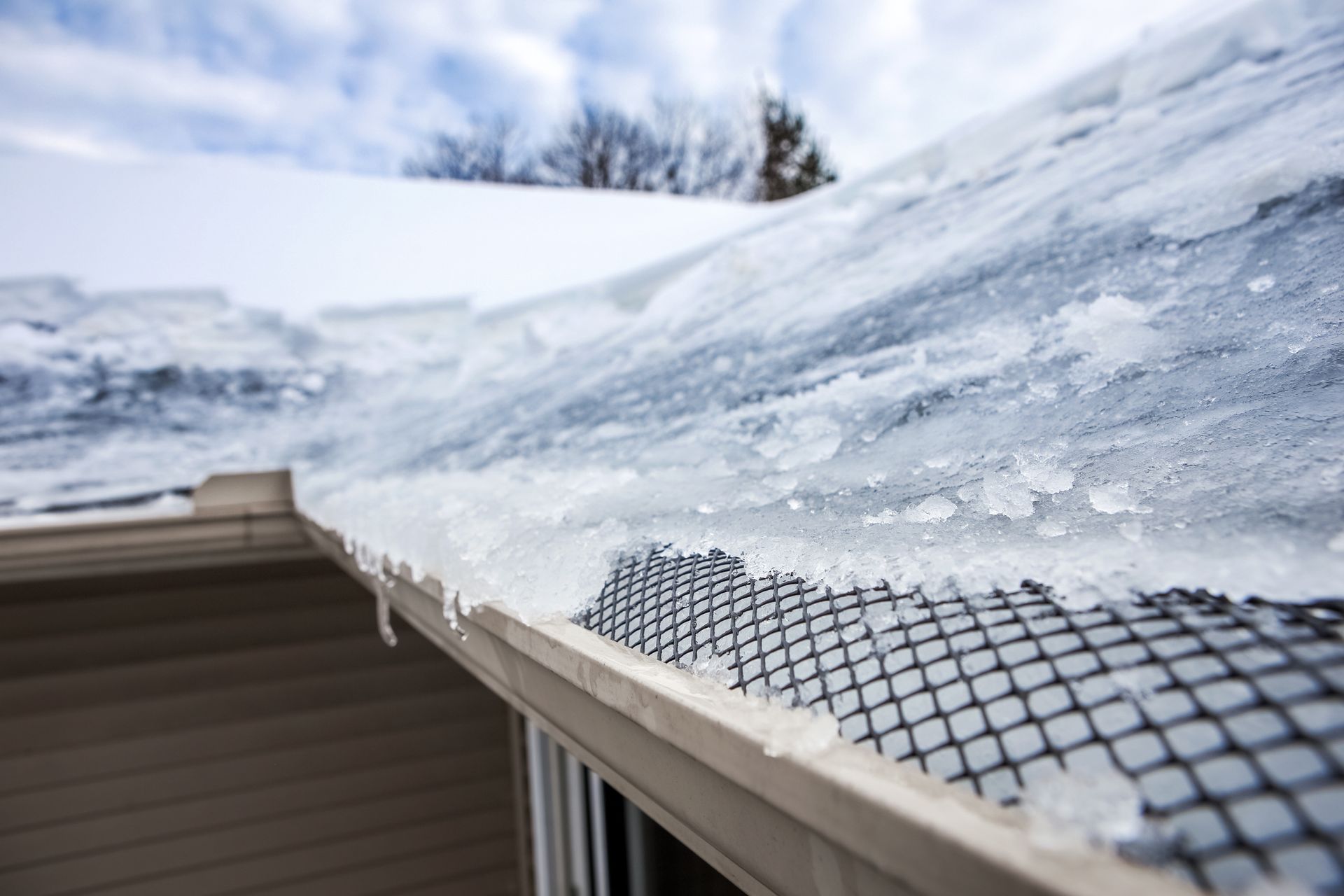
There is a short window every fall in Missoula when roof work is still comfortable and still worth doing. It runs from the first cool mornings until the ground freezes, and most of us let it slip past because the roof is not causing any trouble yet.
The trouble it causes later is almost always something that would have been easy to catch in October. Here is what we check on our own houses, and what we would tell a neighbor to look at before the snow settles in.
In this guide
Start With the Gutters, Because Everything Else Depends on Them
Gutters do more work in a Montana winter than most people realize, and they do it in a way that has nothing to do with rain. When snow on the roof melts, whether from sun or from heat escaping the attic, that water has to go somewhere. A clear gutter carries it away. A gutter packed with pine needles and leaves holds it until it freezes.
Once ice forms in a blocked gutter, it becomes the anchor for an ice dam. Water backs up behind it, sits on the shingles, and works its way under the laps. Shingles shed water running downhill; they do not hold standing water, and they were never meant to.
So the first job is clearing the gutters and the downspouts, and then checking that the downspouts actually discharge somewhere sensible rather than straight onto a walkway that will turn into an ice rink. While you are at it, look at the hangers. Three seasons of ice weight loosens them, and a gutter that has sagged in the middle will hold water at the low point no matter how clean it is.
Clear the Roof Surface and Look at What Comes Off
Needles and leaves sitting on a roof hold moisture against the shingles all winter. In the valleys they do worse than that, blocking the channels that carry the most water on the whole roof. A valley that backs up is one of the most common leak sources we see in the Bitterroot and around Missoula.
What comes off the roof is worth a look too. A noticeably heavy amount of granule grit in the debris or in the gutters means the shingles are shedding their surface, and the surface is what protects the asphalt underneath. On an older roof that is a sign it is getting close. On a newer one it can point to hail or storm damage from earlier in the year.
If there are branches overhanging the roof, fall is the time to deal with them. A limb that is fine in summer becomes a different proposition when it is loaded with wet snow or ice, and a limb that rubs the roof in wind abrades the shingles in one concentrated spot over a season.
Flashing, Vents, and Every Place Something Sticks Through
Most leaks do not start in the middle of a roof. They start where the roof meets something else: a chimney, a wall, a skylight, a plumbing vent. Those spots are handled with metal flashing and sealant, and sealant does not last forever.
From the ground with binoculars, or better, from a ladder at the eave, look for flashing that has lifted at the edges, sealant that has cracked or pulled away, and vent boots that have split at the collar. Those rubber boots around plumbing vents are cheap, they fail predictably, and they cause a surprising number of winter leaks.
Chimneys deserve extra attention in Missoula because of freeze-thaw. Water gets into mortar joints, freezes, expands, and over years works the joints apart. Flashing sealed against crumbling mortar has nothing solid to hold to. If the chimney crown is cracked or the mortar is visibly deteriorating, that is a fall job rather than a spring one.
The Attic is Half The Problem
The attic tells you things you cannot see from the roof, and in a Montana winter it is where the ice dam problem is actually created.
Heat escaping from the house into the attic warms the roof deck from below. That warm deck melts the snow sitting on it, the meltwater runs down to the cold eave, and it refreezes there. That is an ice dam, and no amount of work on the roof surface prevents it if the attic keeps feeding it heat.
So look for insulation depth and coverage, and particularly for gaps around light fixtures, bath fans, and the attic hatch itself, which are the places heat gets through. Then check the soffit vents at the eaves. Blown insulation drifts over them and blocks the intake airflow, which is extremely common and completely invisible from the yard. If you cannot see light or feel air there, that is your problem.
While you are up there, look at the underside of the roof deck for staining, soft spots, or any daylight showing through. Staining means water has been there even if it is dry now, and finding that in October is a great deal better than finding it in February.
Think About Snow Before It Arrives
Two things are worth settling in advance rather than during the first storm.
The first is where snow slides off and what is underneath. A metal roof or a steep pitch sheds in large releases, and anything in the path, a walkway, a gas meter, a deck rail, a parked vehicle, takes the impact. Snow guards or a change in where people walk are both easier to arrange in the fall.
The second is whether you have a plan for snow removal if it becomes necessary. Most roofs in the Missoula area handle a normal winter without help. The years that are not normal are the ones where having a number to call matters, and so does knowing that chipping at ice with a shovel takes the granules off your shingles along with the ice.
Schrock Roofing
Schrock Roofing has worked out of the Bitterroot Valley since 2014, and we are a GAF Certified contractor and a Malarkey certified premium contractor with an A plus rating from the BBB. We handle fall inspections, maintenance, and the snow and ice work that follows, and we would rather help you avoid a problem than show up after one. Give us a call at (406) 961-2990.
If you would like a hand with the fall check, see our roof maintenance services, or ask us about
snow removal and ice dam services before you need them.
Roof Inspections Around Missoula
Houses across Missoula and the Bitterroot Valley deal with the same winter: real snow load, repeated freeze and thaw, and attics that were often insulated to a minimum standard. A fall inspection built around those conditions is worth more than a generic once-over.
Get in touch to schedule a roof inspection before winter.
Frequently Asked Questions
When should I do fall roof work in Missoula?
From the first cool mornings until the ground freezes, which usually means September through October depending on the year. Working in that window means comfortable conditions and a roof you can safely walk on. Once snow and ice arrive, the same inspection becomes more difficult and more dangerous, and anything you find is harder to fix properly until spring.
Why do clogged gutters cause ice dams?
Snow on the roof melts, from sun or from heat escaping the attic, and that water needs somewhere to go. A clear gutter carries it away. A blocked one holds it until it freezes, and that ice becomes the anchor for a dam. Water then backs up behind it and sits on shingles, which shed running water but cannot hold standing water.
What causes ice dams in the first place?
Heat escaping from the house into the attic warms the roof deck, which melts the snow sitting on it. The meltwater runs down to the eave, which hangs past the heated part of the house and stays cold, and refreezes there. The root cause is attic heat loss and blocked ventilation rather than anything wrong with the roof surface.
Are blocked soffit vents really that common?
Very. Blown insulation drifts out over the eaves and covers the intake vents from inside the attic, and it is completely invisible from the ground. If you cannot see light or feel air moving at the soffit vents, the intake is blocked. Baffles installed between the rafters hold insulation back and reopen the airflow path.
Should I remove snow from my roof every winter?
Usually not. Most roofs around Missoula handle a normal winter without help. Removal becomes worth considering when accumulation is unusually heavy, when repeated melting and refreezing has made the snowpack dense, or when ice dams have formed. If you do need it done, avoid chipping at ice with a shovel, which strips granules off the shingles.
What should I look for in my attic before winter?
Insulation depth and coverage, especially gaps around light fixtures, bath fans and the attic hatch where heat escapes. Whether soffit vents are clear. And on the underside of the roof deck, any staining, soft spots or daylight showing through. Staining means water has been present even if everything is dry when you look.
Get your roof checked before the snow
We will walk your roof and give you a written condition report with photos, so you know what needs work before winter. Call (406) 961-2990 or contact us online.
Request an estimate