Residential Roofing
Repair in Missoula, MT
A roof leak or visible damage does not always point directly to the failed component. Start with the symptoms, document the source as far as practical, and compare repair recommendations against the roof condition and system details.
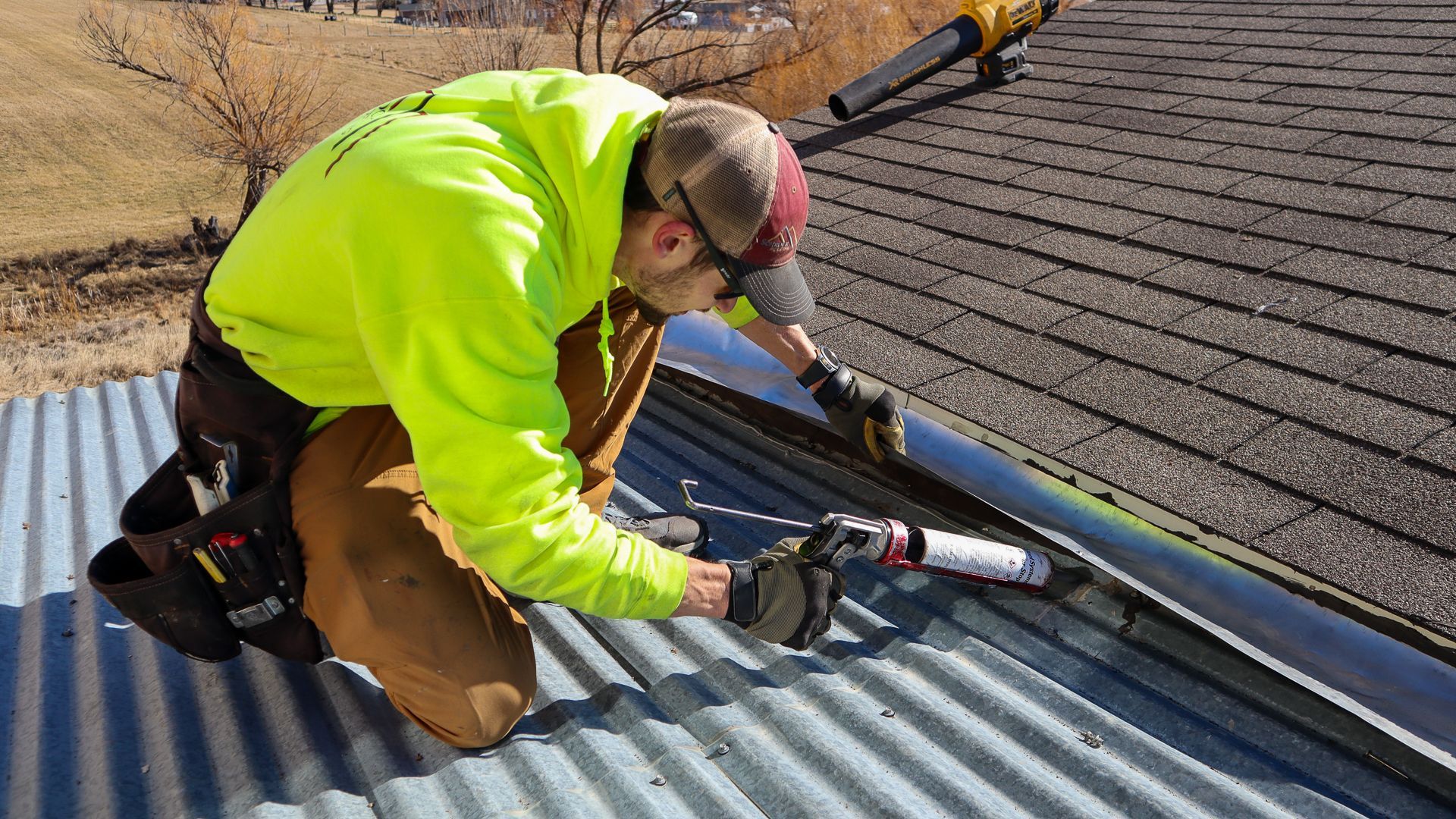
Ask what was found, what will be repaired, what could remain uncertain, and how the area will be checked afterward.
What Is Causing the Problem on Your Roof?
Water can travel before it becomes visible indoors, and exterior damage may involve more than the first loose shingle or open seam you notice. A repair assessment should connect symptoms to accessible roof findings and explain any remaining uncertainty.
Use this page to compare repair scopes, not just prices. Record the suspected source, the repair area, materials, flashing work, underlying damage, winter considerations, and the limits of what can be confirmed before the roof is opened.
A localized failure may support a focused repair, while repeated leaks, widespread wear, or multiple failing details may justify a broader conversation. Ask for photos and findings that explain why the proposed repair is expected to address the problem. See Schrock’s roof inspection approach.
Start with an assessment of the problem area. A repair scope should explain what was found, what will be corrected, and what remains uncertain.
Request a roof assessment →Six Repair Questions That Can Change the Scope.
Two repair proposals can differ because the contractors identified different failure points or different limits. Compare the findings behind the proposed work.
Leak path versus leak source
An interior stain may not sit directly below the roof entry point. Water can move along decking, framing, underlayment, or penetrations. Ask how the suspected source was identified and what evidence supports the repair area.
Damaged or missing roof material
Wind, impact, age, or previous work can leave shingles, panels, fasteners, or seams damaged. The scope should identify what will be removed, replaced, resealed, or resecured and how surrounding material is handled.
Flashing and penetrations
Walls, chimneys, skylights, vents, and pipe openings are common places to investigate because small defects can direct water below the surface. Ask whether flashing is repaired, replaced, or left in place.
Underlayment and decking condition
Surface damage can hide wet or deteriorated material below. Ask what can be evaluated before opening the area and how additional decking work would be documented and approved if it is discovered.
Ice, ventilation, and heat movement
If the problem appears during snowmelt or repeated freezing, the repair conversation may need to include ice protection, attic ventilation, insulation, or air leakage. Replacing surface material alone may not address the reason ice keeps forming.
Repair limits and follow-up
A focused repair should define the area being addressed, exclusions, cleanup, change procedures, and what follow-up is appropriate if the symptom returns. Ask for written terms rather than assuming a repair covers the entire roof.
Repair context: GAF on estimates and concealed conditions and roof components that can affect repair scope. The worksheet helps compare repair findings; it does not diagnose a roof from the page.
A Repair Should Fit How the Roof Is Actually Exposed.
Snow, freezing conditions, ice buildup, roof pitch, access, and the specific roof system can change how a repair is approached in Missoula.
Does the repair trigger local requirements?
Local requirements depend on the work and the property. The City of Missoula provides Building Division resources, and Missoula County publishes reroof guidance. For a repair that grows into a larger scope, confirm the applicable jurisdiction and requirements before work proceeds. City resource · County guide
Ask: “If this repair expands, who confirms whether permits or inspections apply?”Leaks tied to snowmelt or ice dams
When leakage appears during snowmelt, surface repairs may be only part of the answer. Department of Energy guidance links ice-dam risk with heat transfer, air sealing, insulation, and roof or attic ventilation. Ask which conditions the repair can address and which need separate evaluation. DOE guidance
Ask: “Is the leak coming from a failed roof detail, ice backup, or both?”Snow movement around repair areas
On metal roofs or mixed rooflines, snow can move across seams, transitions, lower roofs, and areas above entrances. A repair should account for how water and snow travel through the surrounding roof, not just the isolated damaged spot. Schrock’s system considerations
Ask: “Could snow movement or drainage be contributing to this failure point?”Repair timing and temporary protection
Cold, wet, or icy conditions can affect safe access and the way roofing materials are handled. Ask what conditions are needed for the planned repair and how the home will be protected if the permanent work has to wait. GAF’s winter guidance
Ask: “What conditions are needed for this repair, and what is the protection plan if weather delays it?”Repair Details Change with the Roof System and Failure Point.
Schrock works with residential systems that include architectural shingles, standing-seam metal, exposed-fastener metal, and low-slope solutions. Repair materials and methods should be compatible with the existing system and surrounding details. System reference.
| Existing roof system | Repair focus | Repair question |
|---|---|---|
| Architectural shingles | Damaged shingles, seal strips, ridge or starter areas, flashing, and nearby underlayment. | “Is the repair limited to shingles, or does the surrounding flashing or underlayment need work too?” |
| Standing-seam metal | Seams, clips or attachment, penetrations, panel movement, sealants, and snow-related stress. | “Can the affected metal detail be repaired without creating problems at adjacent panels or penetrations?” |
| Exposed-fastener metal | Fasteners, washers, laps, closures, sealants, and the condition of nearby attachment points. | “Are other fasteners or laps showing the same wear that caused this repair?” |
| Low-slope or mixed areas | Membrane or low-slope material condition, drainage, seams, and transitions to steeper roof areas. | “Is the failure at the low-slope material itself or at the transition to the main roof?” |
The Residential Roof Repair Worksheet.
Use the two columns to compare repair findings and written scopes. Mark what each recommendation confirms, excludes, or leaves unresolved before you decide which approach makes sense.
Observed failure point, photos, evidence, and limits of what can be confirmed.
Exact roof area, surrounding material, and boundaries of the proposed repair.
Replacement or repair materials that match the existing roof system and condition.
How concealed deterioration will be documented, priced, and approved if found.
Written treatment of chimneys, walls, valleys, vents, and skylights.
What underlayment or ice-protection material is disturbed, replaced, or extended in the repair area.
Whether attic ventilation, insulation, air leakage, or snowmelt patterns need separate evaluation.
Who confirms permits or inspections if a repair turns into broader reroofing work.
Safe access, property protection, debris removal, and final review of the repair area.
Exclusions, weather delays, payment terms, written repair coverage, and what happens if symptoms return.
Repair A · scope clarity
0 included · 0 excluded · 0 not applicable · 10 unresolved
Repair B · scope clarity
0 included · 0 excluded · 0 not applicable · 10 unresolved
This count shows how many repair questions have been resolved. It does not diagnose the roof or prove that two repairs address the same failure.
Compare repair planning totals with your own figures.
Enter each repair proposal, any separately priced work you plan to include, and a reserve you choose for unresolved conditions. Check the repair boundaries before comparing totals.
Enter both repair proposals to compare the planning totals.
The worksheet only calculates from your entries. It does not diagnose the roof, generate Schrock repair pricing, or submit your information.
Define the Repair Area and Know What Could Expand the Scope
A repair can be focused without pretending every nearby condition is known. Ask what area will be opened, how hidden damage changes the work, what unit pricing applies, and when you will be asked to approve a larger scope.
Keep photos, inspection notes, the repair proposal, and any approved changes together. If two recommendations differ, compare the failure each contractor believes is causing the symptom and how the proposed work addresses it.
Keep a repair record
- Final repair scope and approved changes.
- Before-and-after photos of the repair area when available.
- Material information and any follow-up maintenance guidance.
- Relevant manufacturer information when it applies to the repaired components.
- Written repair terms and the correct contact if the symptom returns.
Missoula Residential Roof Repair Questions.
How do I know whether a roof leak can be repaired?
A repair may be practical when the failure is localized and the surrounding roof remains serviceable. Repeated leaks, widespread deterioration, or multiple failing details can change the recommendation. An assessment should connect the option to visible findings.
Why can a roof leak be hard to trace?
Water can enter at one point and travel before it appears inside. Valleys, flashing, vents, skylights, seams, fasteners, and underlayment can all influence the path, so the interior stain does not always identify the exterior source.
Should I go onto the roof to look for the leak?
Avoid climbing onto a wet, icy, steep, or visibly damaged roof. From a safe location, document interior symptoms and exterior changes you can see without putting yourself at risk, then use a professional assessment for the roof surface.
What can change the cost of a roof repair?
The source and size of the failure, access, roof system, flashing details, material compatibility, concealed decking damage, and whether the repair expands after opening the area can all affect the scope.
What if damaged decking is found during the repair?
Ask how additional decking is measured, priced, photographed, and approved. The exact amount may not be visible until roofing is removed. Framing or structural repairs may require work outside the original roofing scope.
Can repairing shingles solve an ice-dam leak?
Not always. Ice dams can involve snowmelt, refreezing, air leakage, insulation, ventilation, and roof-edge protection. Ask which part of the problem the roof repair addresses and whether attic conditions need separate evaluation.
Will a repair come with the same warranty as a full replacement?
Do not assume the coverage is the same. Ask for the written terms that apply to the repaired area, the workmanship performed, and any manufacturer materials used in the repair.
Sources for Repair Decisions, Winter Conditions, and Roof-System Details.
This resource combines Schrock’s published roofing information with local permitting references and manufacturer or building-science guidance. The repair worksheet is an organizational tool and does not diagnose a roof remotely.
Sources were checked on October 21, 2026. Confirm any current local requirements for the property. A roof assessment and the written repair scope determine the work; concealed conditions cannot be confirmed from this page.
- Schrock Roofing - roof replacement ↗ Condition-based context for repair versus replacement decisions.
- Schrock Roofing - online roof estimate ↗ Planning estimate context when a repair becomes a replacement discussion.
- City of Missoula - Building Division ↗ City permit contacts, applications, and inspection resources.
- Missoula County - Roofing Permit and Inspection Guide (PDF) ↗ County reroof permit and inspection guidance; document dated February 2023. Confirm current requirements.
- U.S. Department of Energy - Eaves Sealed in Cold Climates ↗ Ice-dam mechanisms, air sealing, insulation, and roof protection.
- GAF - Roofing Estimate vs. Final Price ↗ Concealed conditions that can affect repair scope.
- GAF - What Is Included in a Roof Replacement? ↗ Roof components and detail questions relevant to repairs.
- Schrock Roofing - residential roof systems ↗ Shingle, metal, and mixed-system considerations.
- Schrock Roofing - warranty information ↗ Manufacturer and workmanship coverage distinctions.
- GAF - Can You Replace a Roof in the Winter? ↗ Cold-weather handling, scheduling, and safety considerations.
- Schrock Roofing - roof inspections ↗ Roof inspection scope and limits for repair decisions.
Find the Failure, Define the Repair, and Know the Limits.
Share the leak history, visible damage, and previous repair information with Schrock Roofing. A condition-focused assessment can help determine the next practical step for your Missoula home.