Residential Roofing
Contractor in Missoula, MT
Choose a residential roofing contractor by comparing what each proposal actually covers. Focus on the roof condition, the recommended work, the system details, and how the project will be handled from inspection through closeout.
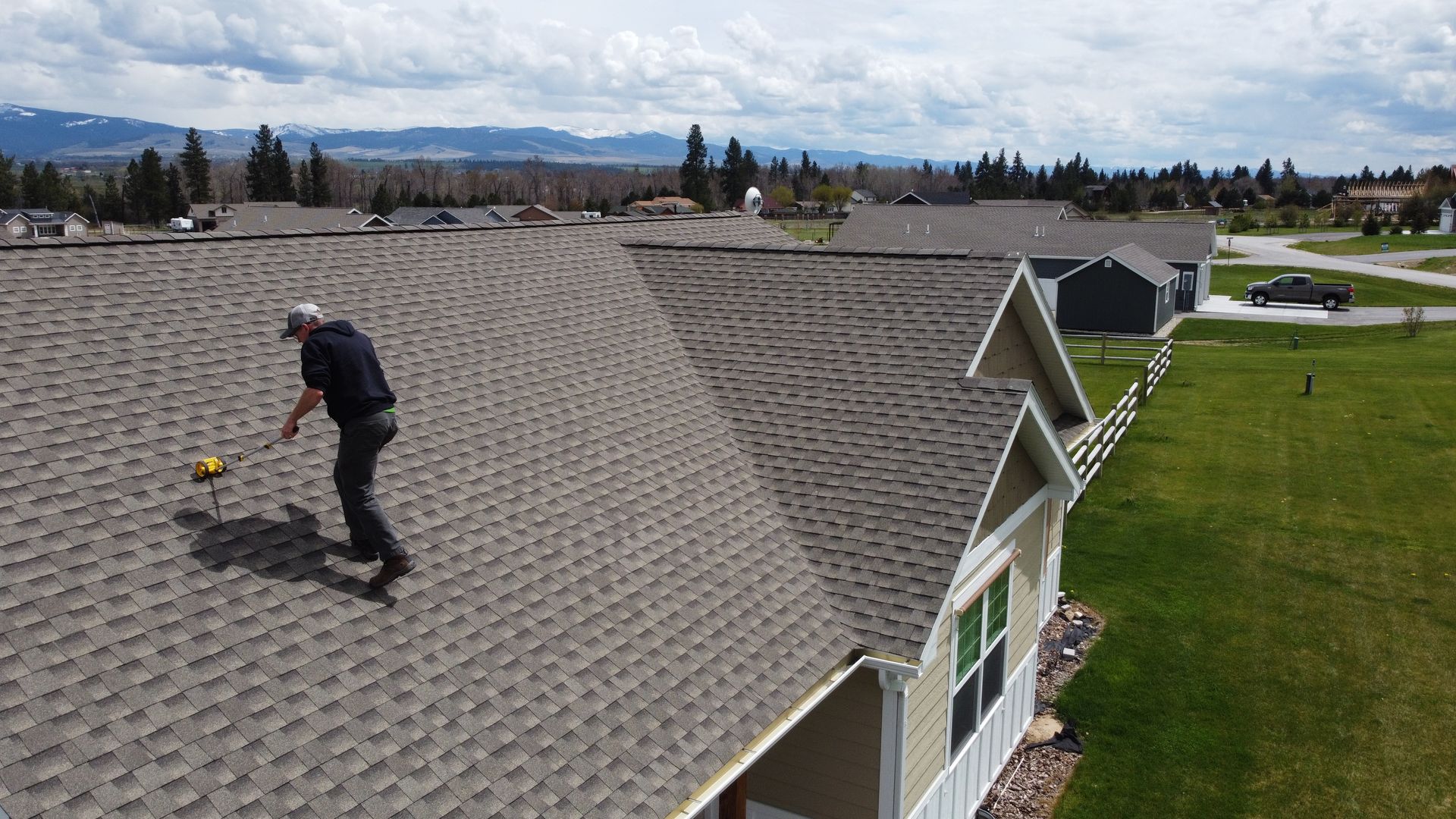
Price matters, but so do the findings, materials, responsibilities, and written exclusions behind it.
What Kind of Roofing Help Does Your Home Need?
A good contractor conversation starts with the condition of the roof, not a sales package. The first job is to identify the concern, document visible findings, and explain whether the next step is repair, replacement, maintenance, or a more focused inspection.
Schrock has operated with "Montana Values" since 2014, with an emphasis on honest communication, long-term relationships, and dependable workmanship. Use the questions below to compare the written scope and project process, not just the total.
If the recommendation is larger than the problem you called about, ask for the reasoning. A focused leak may lead to repair, while widespread wear or repeated failures may point toward replacement. The recommendation should connect back to observed roof conditions. Review Schrock’s replacement approach.
Start by defining the project you want priced, then compare written scopes instead of relying on headline totals alone.
Start a residential roof estimate →Six Details That Separate a Clear Roofing Proposal from a Vague One.
Ask every contractor to address the same categories. Schrock is a Malarkey Roofing Products certified premium contractor and a GAF Certified residential roofing contractor, but the proposal still needs to explain how the work fits this specific home.
Condition findings
The proposal should connect the recommended work to what was observed. Ask what was inspected, what could not be seen, and which photos or findings support repair, replacement, or further investigation.
Defined work area
Confirm exactly which roof areas are included, how access will be handled, and what protection is planned around driveways, landscaping, siding, and entrances. A broad phrase such as “roof work” is not a complete scope.
Material and system details
A proposal should identify the roofing system, key components, and accessories instead of naming only the visible surface. Ask how the selected materials fit the roof slope, transitions, and expected maintenance.
Changes and concealed conditions
Ask how the contractor will handle decking damage or other conditions that become visible during the work. Written unit pricing, documentation, and approval steps make unexpected work easier to manage.
Details around openings
Walls, valleys, chimneys, vents, skylights, and mixed roof slopes deserve specific treatment. Ask how flashing, ventilation, and water-shedding details are handled instead of assuming they are covered.
Communication and closeout
Clarify who coordinates permits when applicable, how weather delays are communicated, what cleanup includes, and what documents you receive after completion. Communication, terms, and warranties should be available in writing.
Useful references: GAF guidance on roofing estimates and roof replacement components. The worksheet is a homeowner comparison tool, not a rating of any contractor.
Make Sure the Contractor Is Planning for the Property, Not a Generic Roof.
Missoula roofs can present different snow, ice, access, slope, and jurisdiction questions. Those conditions should show up in the inspection notes and the written project plan.
Who handles the local requirements?
Confirm which building office serves the property before work begins. The City of Missoula provides building resources, while Missoula County publishes a reroof permit and inspection guide. Ask the contractor to identify the applicable process and responsibility in writing. City resource · County guide
Ask: “Which office serves this address, and who is responsible for permit and inspection coordination?”Snow, ice, and attic conditions
Recurring ice at the eaves can involve more than the roof covering. Department of Energy guidance connects ice-dam risk with heat transfer, air sealing, insulation, and roof or attic ventilation. Ask whether the contractor is evaluating the broader cause or only the exterior symptom. DOE guidance
Ask: “If ice keeps returning, what roof and attic conditions should be checked before we choose the fix?”Roof system and snow movement
Metal roofs and complex rooflines need careful planning around entrances, decks, gutters, and lower roof sections. Ask how the proposed system manages drainage, snow movement, transitions, and any areas with a different slope. Schrock’s system considerations
Ask: “How does this system handle snow, drainage, and the transitions unique to this house?”Weather planning and site protection
Cold conditions can affect material handling, scheduling, and how exposed work must be protected. Ask what weather would pause the job, how the home is protected between work periods, and how schedule changes are communicated. GAF’s winter guidance
Ask: “What weather changes the plan, and how will the property be protected if work pauses?”Ask How Each System Will Be Installed on Your Actual Roof.
Schrock lists architectural shingles, standing-seam metal, exposed-fastener metal, and low-slope solutions among its residential options. The useful question is not only which material you prefer, but how the contractor plans the complete assembly for this roof. System reference.
| Roof system | Ask the contractor about | A homeowner question |
|---|---|---|
| Architectural shingles | Product line, starter and ridge components, underlayment, ventilation, and flashing details. | “Which shingle system are you proposing, and what supporting components are included?” |
| Standing-seam metal | Panel profile, attachment method, penetrations, movement, edges, and snow-management details. | “How will the metal roof be detailed at openings, edges, and transitions?” |
| Exposed-fastener metal | Fasteners, washers, laps, closures, sealants, and the long-term inspection plan. | “What parts of this system need periodic checking, and what maintenance should I plan for?” |
| Low-slope or mixed areas | Material suitability by slope, drainage path, and the tie-in where roof systems meet. | “How will the main roof connect to the porch, addition, or other low-slope area?” |
The Residential Contractor Comparison Worksheet.
Open two written proposals and mark what each contractor has actually documented. A clear inclusion, exclusion, or not-applicable note is more useful than an assumption.
Observed roof condition, photos, limitations, and the reason for the recommendation.
Roof areas included, work to be performed, exclusions, and any separately priced items.
Named products or system specifications, underlayment, accessories, and compatibility.
How decking or other hidden conditions will be documented, priced, and approved.
Written treatment of walls, chimneys, valleys, vents, skylights, and roof transitions.
Named underlayment, ice-protection locations, and roof-edge details for this home.
What is being evaluated, what is included, and what requires a separate scope.
Applicable jurisdiction, responsible party, fees, inspections, and closeout records.
Access, staging, landscaping protection, debris handling, and final walkthrough.
Communication expectations, exclusions, payment terms, weather delays, and warranty documents.
Proposal A · scope clarity
0 included · 0 excluded · 0 not applicable · 10 unresolved
Proposal B · scope clarity
0 included · 0 excluded · 0 not applicable · 10 unresolved
This count only shows how many comparison questions you have resolved. It does not rate a contractor or verify workmanship.
Compare proposal totals using your own figures.
Enter each proposal total, any separately priced work you expect to add, and a reserve you choose for unresolved items. Check the written scope before treating two totals as equivalent.
Enter both base proposals to compare the planning totals.
The tool uses only the numbers you enter. It does not score contractors or estimate a Missoula roofing price. Entries stay on this page and are not submitted to Schrock.
Turn Broad Promises Into Written Project Details.
Phrases such as “as needed” or “standard installation” can hide important decisions. Ask what triggers extra work, how it is measured, what is included in the price, and when your approval is required.
Keep the original proposal, revisions, photos, and approved changes together. If two contractors recommend different solutions, ask each one to explain the roof condition and why the proposed approach fits it.
Ask what you receive at project closeout
- Final scope and any approved changes.
- Relevant completion photos and inspection records when applicable.
- Product information and homeowner maintenance guidance.
- Manufacturer warranty documents and registration information when applicable.
- Written workmanship terms and a clear contact for future questions.
Missoula Residential Roofing Contractor Questions.
How should I compare residential roofing contractors in Missoula?
Compare the written scope first. Look at documented roof findings, material details, exclusions, change procedures, property protection, local coordination, warranties, and communication. A lower total is not automatically a better match if the scope is different.
Should a roofing contractor explain permit responsibility?
Yes. When permitting applies to the planned work, the proposal should identify who confirms the jurisdiction, handles the required steps, and coordinates inspections. Requirements should be checked for the specific property before work starts.
What should I expect during the first roofing assessment?
Expect the conversation to focus on the reason you called, accessible roof conditions, visible problem areas, and the next appropriate step. Some concealed conditions cannot be confirmed until work opens the roof assembly.
Does the contractor need to specify the roofing system?
A useful proposal should identify more than “shingles” or “metal.” Ask for the product or system specification, underlayment, accessories, flashing approach, ventilation work, and any roof areas using a different assembly.
What if hidden damage is found after work starts?
The written proposal should explain how concealed conditions are documented, measured, priced, and approved. Decking repairs may be handled differently from framing or structural work, so ask where the roofing scope ends.
How should a roofer address recurring ice dams?
A contractor should distinguish roof-covering protection from the conditions that contribute to melting and refreezing. Ask whether attic ventilation, insulation, or air-leakage questions need evaluation beyond the exterior roofing work.
What should I ask about roofing warranties?
Ask for the manufacturer documents and the contractor’s written workmanship terms. They may cover different problems and have different exclusions, owner responsibilities, registration steps, or transfer rules.
Sources for Contractor Planning and Roof-System Questions.
This page combines Schrock’s published roofing information, Missoula-area permitting resources, and manufacturer and building-science references. The contractor worksheet is an organizational tool and does not rank companies or claim a local average price.
Sources were checked on October 21, 2026. Confirm current local requirements for the property. This page cannot inspect concealed conditions, verify workmanship, or replace the project documents.
- Schrock Roofing - roof replacement ↗ Replacement scope and condition-based decision context.
- Schrock Roofing - online roof estimate ↗ Online planning estimate context and next steps.
- City of Missoula - Building Division ↗ City permit contacts, applications, and inspection resources.
- Missoula County - Roofing Permit and Inspection Guide (PDF) ↗ County reroof permit and inspection guidance; document dated February 2023. Confirm current requirements.
- U.S. Department of Energy - Eaves Sealed in Cold Climates ↗ Ice-dam mechanisms, air sealing, insulation, and roof protection.
- GAF - Roofing Estimate vs. Final Price ↗ Estimate variables and concealed-condition context.
- GAF - What Is Included in a Roof Replacement? ↗ Roof components and written proposal questions.
- Schrock Roofing - residential roof systems ↗ Shingle, metal, and mixed-system considerations.
- Schrock Roofing - warranty information ↗ Manufacturer and workmanship coverage distinctions.
- GAF - Can You Replace a Roof in the Winter? ↗ Cold-weather handling, scheduling, and safety considerations.
- Schrock Roofing - roof inspections ↗ Inspection scope, limits, and homeowner decision support.
Choose a Contractor from the Written Details, Not the Sales Pitch.
Bring the roof history, your concerns, and the comparison questions that matter to you. Schrock Roofing can help you evaluate the next residential roofing step for your Missoula home.