
Roof Substrate
The condition of the supporting layers determines whether existing roofing can reasonably stay in place or whether deeper work is needed.
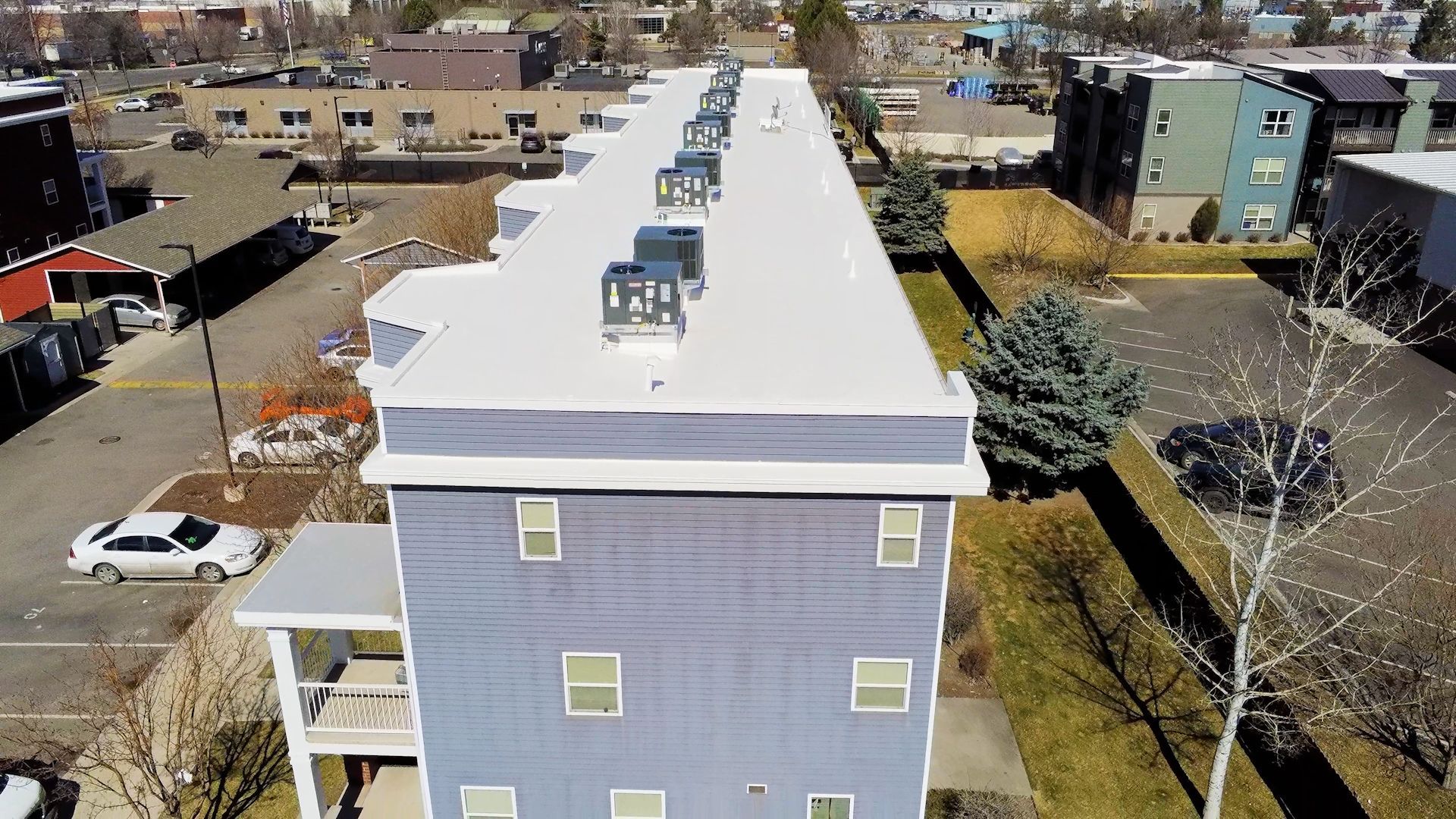
When a commercial roof is showing its age, replacement is not always the only path. Schrock Roofing helps Missoula property owners examine whether the existing roof can be repaired and restored, or whether damage has gone too far for that approach.
Learn what makes a roof a possible restoration candidate and which conditions may point toward replacement instead.
Look Beyond a Worn Roof Surface
A commercial roof can look tired without being beyond repair. The harder question is what lies beneath the worn surface and whether enough of the existing roofing remains sound to justify restoring it.
Schrock Roofing considers leak history, seam and surface condition, areas around rooftop equipment, drainage, previous repairs, and signs that moisture may have affected materials below. That information helps define the limits of any restoration idea.
If important roof components are already compromised, an ambitious patching project may only delay the inevitable. If the roof remains a reasonable candidate, restoration can be evaluated as a separate option from a full tear-off and replacement.
Restoration Questions to Resolve
Roof restoration is a decision about condition and repairability. These are the issues worth working through before committing to a larger corrective project.
A roof may be eligible for restoration if its essential components remain serviceable and defects can be corrected. The amount of deterioration and any concealed moisture are critical factors.
Discoloration or surface wear does not explain the full roof condition. The review must also consider movement, softness, prior repairs, and where damage may extend below what is visible.
Restoration should not cover up an unresolved leak. Repeated water entry may point to seams, penetrations, walls, drains, or damage to concealed components.
Some roofs need substantial preparation before any broader surface treatment. Failed details, damaged sections, or loose materials must be addressed as part of a defined restoration scope.
A roof coating may be part of a restoration proposal when the surface is suitable. It is not automatically the same thing as restoration and cannot make damaged underlying materials sound.
Drainage problems can shorten the usefulness of repairs if they are ignored. Persistent low spots, blocked outlets, and areas around equipment should be examined before selecting a restoration approach.
Snow buildup and refreezing can expose weak edges and previously repaired areas. Restoration planning should consider when damage occurs and whether seasonal conditions limit practical work.
A restoration quote can vary greatly depending on how much repair, preparation, and corrective work is needed. Comparing it with replacement requires an honest picture of what the existing roof can support.
What a Restoration Assessment Covers
The aim of roof restoration is to improve a suitable existing roof. It takes more than covering worn areas. The review needs to account for the parts that remain and the details that must be corrected.
The condition of the supporting layers determines whether existing roofing can reasonably stay in place or whether deeper work is needed.
Cracks, separation, weathered areas, and prior patchwork show where the roof may need repairs before broader restoration work.
Long seams, parapet transitions, and joints between roof sections can be sources of recurring trouble that surface treatment alone may not correct.
Mechanical curbs, exhausts, pipes, and other roof openings create complicated transitions. Their condition can shape the repair effort.
Signs of wet insulation or other concealed damage can limit a restoration proposal. Existing moisture issues should not simply be sealed out of sight.
The roof needs to shed water. Drains, scuppers, low spots, and areas prone to ponding can affect the outcome of corrective work.
Compare the Available Paths
Restoration is most useful when it addresses the real condition of the roof. The choice should be made after considering whether defects are isolated, repeated, or widespread.
A localized defect may be resolved with focused work without moving into a larger restoration project.
When substantial portions remain sound, broader repairs and suitable renewal work may make restoration worth evaluating.
For a compatible, stable surface, a coating may be considered as a protective treatment or part of a larger plan.
A roof with extensive damage, persistent moisture problems, or major deterioration may need replacement instead of restoration.
Understanding the Restoration Scope
Building owners need to know which roof components are staying, which require work, and why the proposed approach is appropriate. That begins with an assessment, not a predetermined treatment.
Share the ages and types of existing roofs if known, recurring leaks, patches, and previous restoration attempts.
Look at visible roof surfaces, seams, penetrations, drainage, and indications of damage beneath the surface.
Determine where repairs could work and where existing damage may rule out a restoration approach.
Discuss the relative merits of focused repairs, restoration, coatings, or replacement based on findings.
Define preparation, corrective work, building access, and weather constraints for the option chosen.
Restoration Planning in Missoula
A commercial roof in western Montana takes repeated temperature swings, snow accumulation, and periods of melting water. Existing cracks, seam gaps, and weak transitions can become more noticeable as those conditions change.
On low-slope roofs, water may collect near drains or behind equipment. Restoring the surface without considering those water paths can leave an important cause of deterioration unresolved.
Winter conditions also influence access and the timing of corrective work. The right project should fit the roof condition and the practical season for performing that work, rather than rely on a rushed surface fix.
Commercial Roofing Experience
Commercial restoration is one part of Schrock Roofing's services, alongside repair, coatings, replacement, and maintenance. More than 150 organizations trust the company with proactive roof asset care, which depends on recognizing when existing roofing can be maintained and when a bigger decision is needed.
Look Through Roofing ProjectsChoose the Next Roofing Conversation
You may not know whether a roof can be restored until its condition is examined. The useful starting point is what has failed, what has been tried, and how the building is used.
Answers Before You Commit
It generally involves correcting defects and renewing a suitable existing roof instead of replacing every component. The exact work depends on the roof type and the condition found.
A coating is a surface treatment that may be included in some projects. Restoration can involve a broader set of repairs and preparation. Neither is right for a roof with problems the proposed work cannot correct.
Possibly, but the source and extent of the leaks must be understood. Localized defects may be repairable, while widespread water damage can make restoration unsuitable.
Replacement may make more sense if roofing is deteriorated across large areas, underlying components are compromised, or earlier repairs have not resolved recurring problems.
Yes. The roof surface, seams, drainage, prior work, and signs of concealed moisture should be considered before deciding what can reasonably stay in place.
They can. Snowmelt, refreezing, and drainage issues may reveal weaknesses that need correction, while weather conditions may limit when restorative work can be performed.
The roof area, access requirements, existing material, amount of defective roofing, preparation, detail repairs, and any selected surface treatment all affect the scope.
Continue monitoring the roof, keeping drainage routes in view, and addressing new concerns as they arise. Restoration does not remove the need for preventative maintenance.
Schrock Roofing | Missoula Commercial Restoration
Describe the roof problems your building has had and what you need the next project to accomplish. Schrock Roofing can help evaluate whether restoration is worth considering or if another service is more appropriate.