
Existing Roof Surface
The current membrane or roofing material must be in a condition that can accept treatment. Loose, badly worn, or deteriorated areas can limit coating suitability.
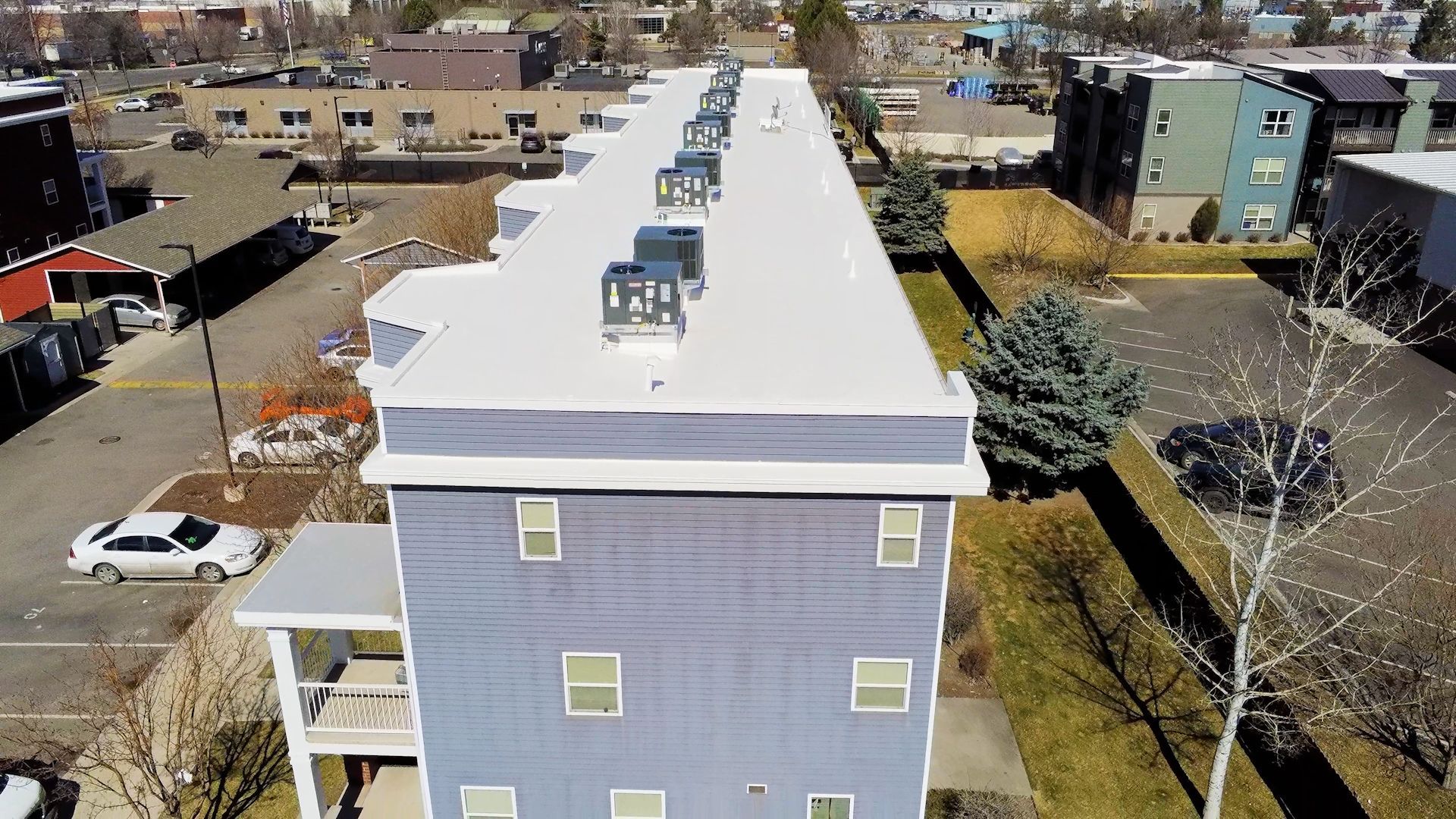
An aging commercial roof does not always need to be torn off. Schrock Roofing helps Missoula building owners find out whether a protective roof coating makes sense, what needs repair first, and how to plan the work around Montana weather.
If you are weighing a coating against ongoing repairs or replacement, start with the roof conditions and decisions explained below.
Before You Coat a Commercial Roof
A roof coating can renew a suitable surface, but it will not correct soaked materials or a failed roof beneath it. The first question is not which coating to use. It is whether the roof is sound enough to keep.
Schrock Roofing reviews the existing material, visible wear, leak history, seams, roof penetrations, and drainage. Areas that stay wet or show signs of trapped moisture deserve a closer look before a coating scope is discussed.
That review helps separate a practical coating project from a roof that needs significant repairs, restoration, or replacement instead. You get a basis for the decision rather than a coating recommendation based only on age.
Commercial Coating Decisions
The right answer depends on the existing roof, not on a coating label. Explore the details that usually determine whether a commercial roof is a suitable candidate.
Different existing roof materials and conditions call for different approaches. Before specifying a coating, the roof needs to be identified and checked for soundness and compatibility with the proposed product.
Dirt, loose material, deteriorated sealant, and poorly bonded repairs can prevent a coating from adhering properly. The preparation requirements should be clear before work is priced.
A coating is not a substitute for investigating water entry. If leaks are active, the underlying cause and any wet materials need attention before a surface treatment can be considered.
The age of a roof alone does not show whether coating is appropriate. Prior patches, repairs, surface movement, and the condition of concealed layers can change the recommendation.
Water that collects near drains, low spots, or equipment curbs can place extra demands on a commercial roof. Drainage problems should be understood before deciding on a coating scope.
Coating work depends on suitable weather and a surface that meets the product requirements. In Missoula, cold nights, precipitation, and short seasonal windows can affect scheduling.
A coated roof still needs attention. Inspections, drainage care, and prompt evaluation of new damage help owners understand how the surface is holding up after the project.
A coating proposal should reflect the actual roof, including preparation, repairs, size, access, and the amount of detail work involved. A low initial figure may leave important work unspecified.
What Makes a Coating Job Work
The visible coating is only the final layer of the job. A dependable project starts with a roof that is suitable for treatment and repairs that address the areas most likely to let water through.
The current membrane or roofing material must be in a condition that can accept treatment. Loose, badly worn, or deteriorated areas can limit coating suitability.
Surface contamination and weak bonding can undermine a coating. Cleaning methods and preparation should match both the roof and the proposed product.
Raised laps, seams, patched sections, and previous leak areas deserve close attention. They may need separate corrective work before coating begins.
Vents, mechanical supports, and equipment curbs interrupt a roof surface. The transitions around them must be evaluated rather than simply painted over.
Surface appearance does not reveal every wet area. If moisture is trapped underneath, a coating may hide the problem without solving it.
Drain locations, scuppers, and areas where water lingers affect both preparation and how the finished roof will be maintained.
Know When to Coat and When Not To
A coating may be one reasonable option for a commercial roof, but it should earn its place in the plan. The condition of the existing roof determines which type of work will actually address the problem.
A protective coating can be considered when the roof is sufficiently sound, the surface is compatible, and preparation can be completed properly.
Isolated leaks, damaged seams, and weak details may need correction before a coating can be considered for the remaining surface.
A roof needing more extensive corrective work may call for a restoration scope that goes beyond surface coating alone.
Widespread deterioration or moisture damage can make replacement the more practical path than covering an unsuitable roof.
From Roof Review to Coating Plan
Owners should know what is being coated, what must be corrected first, and what conditions the application depends on. The work should be defined before a schedule is set.
Share current leaks, previous coating attempts, the roof age if known, and the building areas most affected.
Review the surface and vulnerable details to determine whether a coating is worth considering.
Separate cleaning, repair, moisture concerns, and other preparatory work from the coating application itself.
Compare a coating scope with repair, broader restoration, or replacement when the condition warrants it.
Agree on the areas to be treated, surface preparation, access needs, and a weather-aware work plan.
Coatings in Western Montana
Commercial roofs here face snow buildup, meltwater, strong sun, and frequent temperature changes. Those conditions matter when judging the existing surface and deciding when coating materials can be applied.
A low-slope roof with rooftop equipment, shaded sections, or slow drainage may hold moisture longer than it appears from the ground. Crews need to account for those areas rather than assume the whole roof dries at the same pace.
A reasonable plan considers both the roof condition and the application window. Rushing a surface treatment in unsuitable conditions can be a poor trade for a building owner trying to avoid larger problems.
Commercial Roofing Work in Montana
More than 150 organizations trust Schrock Roofing to help manage and maintain commercial roofing assets. That work calls for practical decisions about protecting existing roofs, planning maintenance, and knowing when a coating is or is not the right scope.
View Completed Roofing ProjectsPlan Your Building Roof Work
You can start with a leak, questions about a coating, or a roof that seems to be wearing out. An assessment helps determine which conversation should come first.
Answers About Roof Coatings
No. Coating suitability depends on the existing material, moisture conditions, surface stability, prior repairs, and product compatibility. A roof with extensive damage may need a different approach.
Not by itself. A leak needs to be traced and corrected. Coating over an unresolved entry point or wet roofing can leave the original problem in place.
The work may include evaluating the surface, cleaning it, repairing defects, preparing seams or penetrations, and confirming that application conditions meet the selected product requirements.
Persistent ponding needs evaluation. The locations and causes of standing water can affect whether a particular coating approach is appropriate and whether drainage work is needed first.
Sometimes. If the existing roof is sound and compatible, a coating may be an option. Significant deterioration or moisture damage can make replacement more sensible.
The schedule depends on the selected product and forecast. Roof surfaces must meet application and curing requirements, so cold, rain, snow, and lingering moisture can limit the workable window.
Roof area, access, existing material, cleaning, repairs, number of penetrations, drainage details, and the specified coating work all influence the scope and price.
Yes. Owners should continue monitoring drainage, checking for damage, and arranging roof reviews as needed. A coating does not eliminate ongoing roof care.
Schrock Roofing | Missoula, Montana
Tell Schrock Roofing what your commercial roof is doing, what repairs have been tried, and what you hope a coating will solve. The next step is to establish whether the roof is a suitable candidate and what the work would involve.