
Winter Roof
Decision Guide for Missoula, MT
Snow load, ice dams, and falling ice do not all call for the same response. Learn what you can observe safely, which signs deserve a roofing visit, and when the concern is urgent enough to leave the building and seek emergency help.
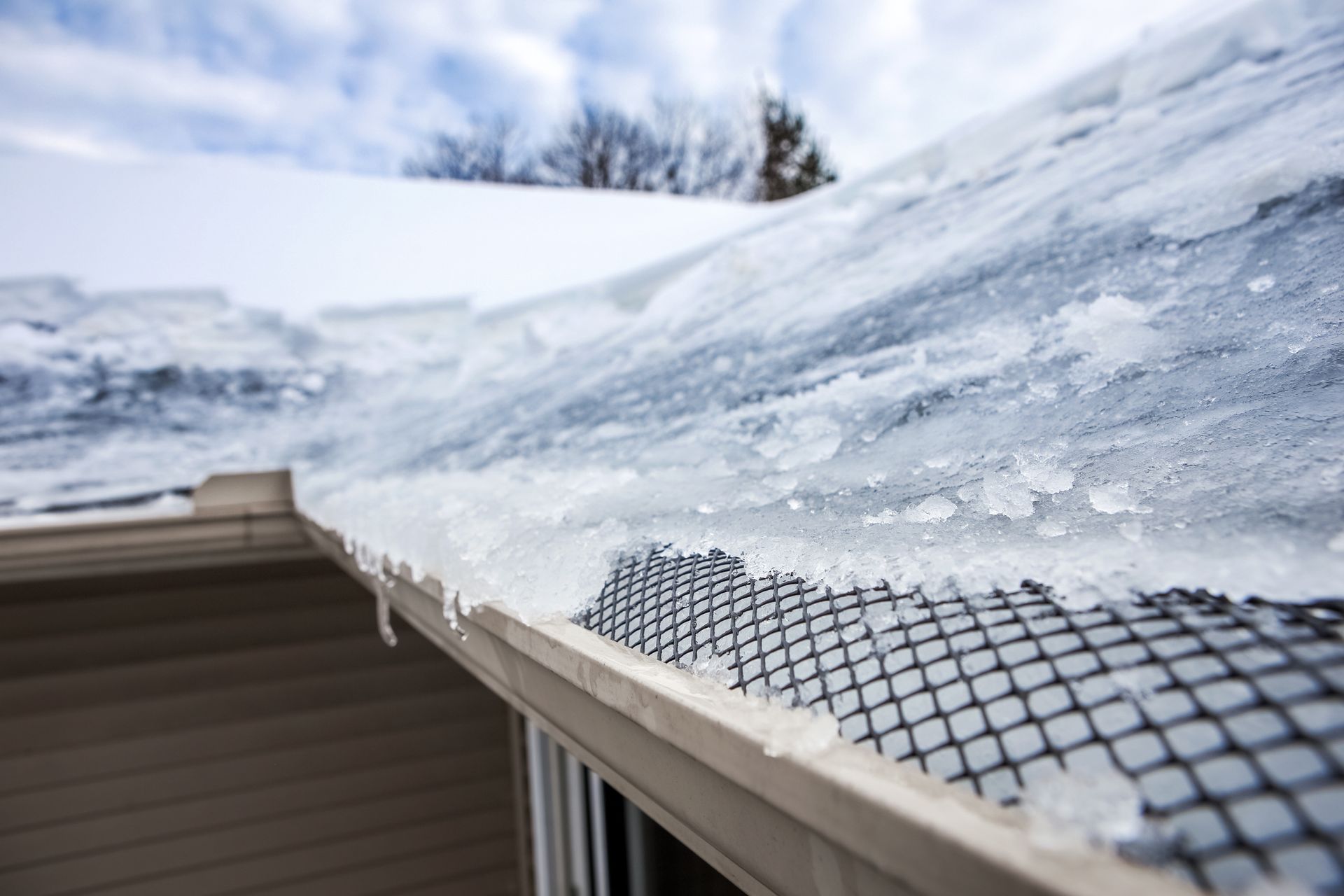
The important clues are snow distribution, water movement, building changes, and where people could be hurt.
Is the snow on your roof normal or a warning?
There is no reliable snow-depth rule that works for every Missoula building. A deep layer of light powder and a heavy, water-soaked drift do not place the same demand on a roof. The roof shape, structure, prior condition, and where snow collects matter as much as what you see from the street.
Start with a safe view from the ground or inside the building. Record the weather, where snow or ice is concentrating, whether water is reaching the intended drainage points, and any change in ceilings or doors. Photographs and a short timeline will help a roofing professional understand the problem without anyone climbing onto the roof.
If you see active leakage, ice blocking runoff, or a growing drift, ask about a condition-based winter service visit. New sagging, sharp cracking sounds, or obvious structural movement are different: leave the affected area and contact emergency services or a qualified structural professional before requesting routine roof work. Review Schrock’s winter roof services.
Watch from a safe position and note where the load is concentrated. If you are concerned about wet snow or drifts, request a roof-specific review rather than using an inch threshold.
Explore winter roof service →6 Warning Signs Your Roof Needs Winter Attention
Some conditions call for monitoring. Others warrant professional service, and possible structural distress calls for leaving the area. Do not use this list to declare a roof structurally safe.
Heavy, wet snow and drifting
Snow can become denser as temperatures rise or rain falls on an existing layer. Wind may pile it against parapets, dormers, and taller walls. A concentrated drift can be important even if the rest of the roof looks lightly covered. Ask for an assessment of the particular building.
New sagging or sharp sounds
A bowed ceiling, unusual cracks, popping or creaking, or doors suddenly binding can signal structural trouble. Do not go outside under the roof edge to investigate, and do not send a crew onto the roof. Leave the affected area and call emergency or structural professionals.
Ice ridges at the eaves
A ridge of ice can block meltwater from leaving the roof. Water may then move beneath shingles or around vulnerable details. Note the affected edge and any nearby interior staining. Chipping ice with sharp tools can cause more damage than the ice itself.
Water appearing during a thaw
A ceiling stain that grows as temperatures swing above freezing may be linked to backed-up meltwater or another roof opening. Protect belongings when safe, keep clear of bulging ceilings or electrical fixtures, and request a leak evaluation instead of assuming the entry point is directly overhead.
Blocked drainage paths
Frozen gutters, downspouts, valleys, scuppers, and low-slope drains can redirect water. On broad or flatter roofs, trapped meltwater deserves particular attention. Report the blockage, but do not pry at frozen parts or walk out to inspect them.
Snow or ice falling below
Roof edges over walkways, driveways, doors, and lower roofs deserve a ground-level safety zone. Metal and steep roofs can release snow suddenly; hanging ice may fall without warning. Keep people and vehicles clear while a qualified provider considers safe removal or retention needs.
How Missoula Winter Weather Affects Your Roof
Missoula winters can bring accumulation, drifting, sunshine, refreezing, and thaw periods within one season. Those changes affect both the roof and the safest way to respond.
Freeze-thaw at the eaves
Heat escaping into a roof or attic can melt snow above cold overhangs. Water refreezing at the edge may form an ice dam and back up toward the home. Removing ice can help with an immediate blockage, but repeated trouble calls for a look at heat loss, insulation, ventilation, and roof details. DOE explanation · Schrock winter service
Ask: “Is this only a drainage blockage, or is the roof repeatedly melting snow from below?”Wind-driven pockets of snow
Drifts often build near taller walls, dormers, valleys, equipment, and parapets. The main concern may be the weight in one area rather than average snow depth across the entire roof. A qualified professional should consider load distribution and building condition; a photograph alone cannot establish capacity. Snow-load guidance
Ask: “Could this drift create an uneven load, and who can evaluate the structure if needed?”Sliding snow over busy areas
Snow may release abruptly from metal roofing or a steep slope after warming. Look at the paths over doors, sidewalks, decks, parked vehicles, and lower roofs. Keep those areas clear until the hazard has been evaluated; any long-term snow-retention choice needs to fit the actual roof. Roof-type information
Ask: “Where might snow release, and what needs protection on the ground?”Access after a storm
A roof that needs attention may still be unsafe to approach. Wind, ice, ladders, power lines, concealed skylights, and falling snow all affect how professionals work. Ask whether the condition calls for an alternate access method, a weather pause, or a different specialist. Worker safety guidance
Ask: “What can be done safely now, and what must wait for better conditions?”Winter Risks for Shingle, Metal, and Low-Slope Roofs
Asphalt shingles, standing-seam metal, exposed-fastener metal, and lower-slope areas handle snow and meltwater differently. Describe the roof material when you call; the safest service method depends on the actual assembly and where ice or snow has collected. Schrock’s roof-type overview.
| Roof type | Watch for | Ask the professional |
|---|---|---|
| Asphalt shingles | Ice ridges at eaves and valleys, water backing beneath the covering, and shingle damage from scraping. | “How will you address the ice without cutting or loosening the shingles?” |
| Standing-seam metal | Snow release over entries, concentrated drifts, seams, and any existing snow-retention devices. | “Where could snow slide, and how will people below be protected?” |
| Exposed-fastener metal | Ice around fasteners and penetrations, sheet edges, drainage points, and safe access without damaging panels. | “How do the panels and fasteners change the removal method?” |
| Low-slope or mixed areas | Snow trapped against taller walls, blocked drains, ponding, and transfers to lower roof sections. | “Which drainage points need attention, and is structural review indicated?” |
Compare two winter roof service proposals.
If two providers recommend different work, use this checklist to see what each plan actually includes. Mark a subject “Included” only when it is stated in writing. This is a scope comparison, not a tool for deciding whether a loaded roof is safe.
Where accumulation, drifted or wet snow, and visible changes were reported.
Roof type, pitch, height, crew access, utilities, and hazards below.
Whether snow will be reduced, how load balance is considered, and how roof materials are protected.
Location of blocking ice, planned method, limitations, and follow-up for leaks.
Gutters, scuppers, drains, valleys, and fragile frozen roof-edge components.
Visible water entry, interior protection, photo records, and repair referrals.
Signs that require stopping work and involving emergency or structural specialists.
Conditions that affect access, delays, changing hazards, and communication.
Fall zones, people and vehicle access, snow placement, and debris removal.
Remaining roof repairs, repeat ice-dam causes, maintenance needs, and referrals.
Quote A · checklist clarity
0 included · 0 excluded · 0 not applicable · 10 unresolved
Quote B · checklist clarity
0 included · 0 excluded · 0 not applicable · 10 unresolved
Compare written service costs only after checking the scope.
Enter the price each provider actually quotes, any separately priced work you plan to accept, and your own reserve for unknowns. The sums cannot measure roof risk or establish that both proposals address the same hazards.
Enter both base quotes to compare the amounts you recorded.
Get clear on what the winter work will and will not solve.
“Remove the ice” and “fix the leak” may be two different scopes. Ask what the crew can safely address during this visit, whether drainage can be reopened, what will be photographed, and which concerns need a later inspection, repair, insulation evaluation, or structural review.
Keep photographs, written findings, approved changes, and the service report together. If melting continues or an ice ridge returns, a record of conditions and previous steps will be much more useful than relying on memory. No short-term removal method guarantees that the underlying cause has been corrected.
Keep a winter roof record
- Dated photos of accumulation, blocked drains, or ice at the edges.
- Notes on leaks, ceiling changes, weather, and what happened first.
- The agreed scope, service limits, and any areas left untouched.
- Recommendations for roof repairs or a qualified structural assessment.
- Follow-up items for drainage, insulation, ventilation, or snow retention.
Winter roof questions, answered.
How much snow is too much for a roof in Missoula?
There is no universal safe depth. Wet snow, drifting, rain on snow, the roof structure, and prior condition all matter. A measurement from the ground cannot tell you the design capacity. If you are concerned about heavy or uneven accumulation, request a qualified assessment rather than waiting for a specific number of inches.
What warning signs mean I should leave the building?
New roof or ceiling sagging, unusual popping or cracking, serious movement, or doors suddenly jamming may indicate structural stress. Leave the affected area and contact emergency services or a qualified structural professional. Do not go onto the roof or stand beneath a suspect edge to investigate.
Can I shovel roof snow or chip off an ice dam myself?
Walking on an icy roof creates fall and collapse risks, while sharp tools can damage shingles, metal, gutters, and wiring. Falling snow can also injure someone on the ground. Keep people clear of release areas and contact a qualified winter roof service provider to discuss safe options.
How can I tell whether an ice dam is causing a leak?
Ice piled at an eave and water stains appearing during a thaw are clues, not proof of the entry point. Water can travel before becoming visible indoors. Note the location and timing, protect belongings when safe, and ask for a leak evaluation. Stay clear of wet electrical fixtures and bulging ceilings.
Does removing an ice dam stop the problem permanently?
Not always. Clearing the blockage can allow meltwater to drain, but heat loss, air leakage, insulation, ventilation, damaged roof details, or future weather may cause another buildup. Ask for a written distinction between immediate ice removal and the separate work needed to address recurring causes.
When should I call Schrock instead of just monitoring?
A growing ice ridge, an active leak, heavy wet snow, a concentrated drift, or snow sliding toward an entrance are reasons to discuss professional service. Structural warning signs require emergency or structural help first. Schrock reviews weather, access, roof type, and conditions before determining what service is possible.
Can winter roof service be delayed by the weather?
Yes. Ice, wind, temperature, visibility, concealed hazards, and access can limit safe work. A provider may recommend monitoring, temporary protection, a different method, or a return visit when conditions permit. Ask what can happen safely now and what will need a follow-up inspection or repair.
Reference material and important limits.
This guide uses Schrock Roofing’s published winter services and maintenance information alongside public roof-load, fall-safety, and building-science resources. The comparison worksheet simply organizes written scope and price details. It does not calculate snow weight or certify that a building is safe.
References were assembled for this guide on November 17, 2026. Local weather, roof design, structural condition, and safe access must be evaluated for the specific property. If distress is visible, leave the area and seek appropriate emergency or structural assistance.
- Schrock Roofing — snow and ice-dam services ↗ Approach to heavy accumulation, frozen drainage, access, and controlled winter service.
- Schrock Roofing — roof repair ↗ Winter leak assessment, repair limits, and steps for active water entry.
- FEMA — Snow Load Safety Guide (WBDG) ↗ Structural stress warning signs and uneven snow-load concerns.
- OSHA — Winter Weather Hazards ↗ Access, rooftop snow-removal, falls, and worksite hazards.
- U.S. Department of Energy — Cold-Climate Eaves ↗ Ice-dam formation, heat transfer, air sealing, and insulation considerations.
- Schrock Roofing — roof care resources ↗ What owners can observe safely and when maintenance becomes repair.
- Schrock Roofing — roof inspections ↗ Condition assessments and the limits of visible findings.
- Schrock Roofing — residential roof types ↗ Shingle, metal, and low-slope system considerations.
- Schrock Roofing — residential maintenance ↗ Preventative planning, winter observation, and condition records.
- GAF — winter roof work guidance ↗ Cold-weather installation and weather-related scheduling limitations.
- Schrock Roofing — contact and service ↗ Missoula service contact information and how to describe an urgent roof concern.
Get Professional Help With Winter Roof Problems in Missoula
If snow, ice, or a thaw is creating a roofing concern, describe the roof type, weather, visible changes, and safe photos when you contact Schrock. For sagging, new cracking, or suspected collapse, leave the area and call emergency or structural professionals first.