
Roof Replacement
Planning Guide in Missoula, MT
Understand what you’re buying before you choose a bid. Work through the cost variables, local permit questions, and roof details that belong in a written proposal.
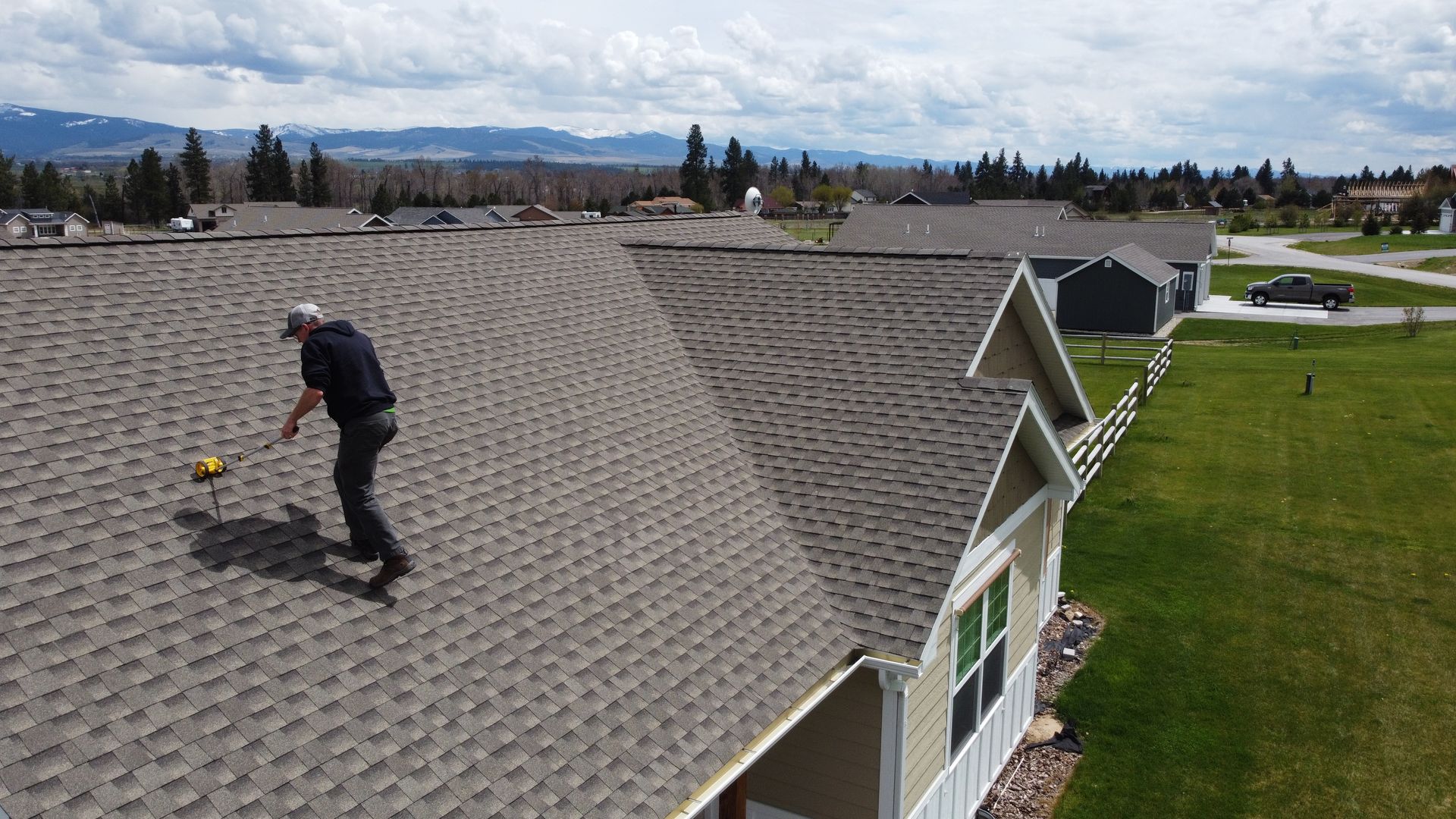
A low headline price tells you very little until you know what it includes.
What will a new roof cost for your home?
The useful answer begins with the roof: its measured surface area, existing layers, condition, material choice, and the work required around every edge and opening. A single “Missoula average” cannot tell you whether a proposal includes the repairs your house needs.
Use this guide to separate confirmed work from allowances and unanswered questions. Start with the online estimator for an initial planning figure, then compare written proposals against the same scope. Keep the completed worksheet with your quotes so you can return to the details during each contractor conversation.
Before pricing a replacement, establish whether replacement is warranted. An isolated failure may support a repair; broader deterioration can require a different plan. Ask the contractor to connect the recommendation to photographs and observed conditions. See Schrock’s replacement approach.
Start with a planning estimate, then have the roof and proposed work confirmed. Use this guide when the written quote arrives.
Start an online roof estimate →Six things that change the scope—and the cost.
Ask each bidder to describe these items for the same roof. Differences become easier to explain when the assumptions are visible.
Roof area and geometry
Living-area square footage is not a roof measurement. Pitch, overhangs, garages, dormers, valleys, and waste affect quantities. Ask for measured roof area and what buildings or sections are included.
Removal and access
How many layers come off? Where can equipment and debris containers go? Compare tear-off, hauling, disposal, and site access assumptions. A simple driveway setup and a constrained work area are different jobs.
Decking underneath
Some damage becomes visible only after removal. Request a written repair rate, the unit it applies to, any included allowance, and the approval process. Separate decking repairs from possible framing or structural work.
The complete roof system
Identify the shingle line or metal specification, underlayment, ice protection, edges, and accessories. A quote that only names the visible material leaves much of the assembly undefined.
Transitions and airflow
Have the contractor address walls, chimneys, skylights, pipe openings, and low-slope sections individually. Ask what ventilation work is proposed and whether attic corrections sit outside the roofing price.
Responsibilities and terms
Record who handles permits, inspections, protection, cleanup, and warranty paperwork. Check exclusions, payment milestones, quote expiration, and the procedure for changes before comparing totals.
Put the property’s conditions into the proposal.
A Missoula mailing address is only a starting point. Permitting jurisdiction, roof assembly, winter performance, and access need property-specific answers.
City or county jurisdiction?
Verify which building office serves the address. The City of Missoula Building Division provides its own permit and inspection resources. Missoula County’s published reroof guide calls for a permit and typically a dry-in inspection and final inspection. Have the contractor confirm current requirements and document who handles them. City resource · County guide
Ask: “Which office handles this property, and are permit fees and inspection coordination in your proposal?”Ice dams and heat loss
Snow can melt over a warmer roof area and refreeze at colder eaves. The Department of Energy identifies air sealing, insulation, and appropriate roof or attic ventilation as parts of reducing that heat transfer. Ice protection at the roof edge has a different job: limiting water entry. Ask what the project addresses and what needs separate evaluation. DOE guidance
Ask: “If we’ve had ice dams, what is being investigated beyond the shingles?”Snow movement and roof design
With metal roofing, evaluate where snow could release above doors, walkways, decks, gutters, and lower roofs. Ask whether a snow-retention design is needed and whether it is priced. A house with several roof pitches or additions may need more than one compatible roofing system. Schrock’s system considerations
Ask: “Show me how the chosen roof handles snow and drainage at the entrances and transitions.”Weather windows and protection
Cold-weather work can involve material-handling requirements, slower progress, and weather pauses. Have the contractor explain the installation requirements for the selected products and the plan for protecting exposed work. Confirm how delays affect scheduling and communication. GAF’s winter guidance
Ask: “What conditions would pause work, and how will the house be protected overnight?”Compare assemblies, not just “shingle” versus “metal.”
Schrock’s residential system options include architectural shingles, standing-seam metal, exposed-fastener metal, and low-slope solutions. Ask how the proposed system fits your roof’s slope, details, upkeep, and ownership plans. System reference.
| System | Get specific about | A useful question |
|---|---|---|
| Architectural shingles | Exact product, starter and ridge components, ventilation, and flashing details. | “Are both shingle quotes proposing the same product and supporting assembly?” |
| Standing-seam metal | Panel specification, attachment, movement, penetrations, and snow management. | “What is included around openings and where the panels meet other roof areas?” |
| Exposed-fastener metal | Fasteners, washers, laps, closures, and the inspection or maintenance plan. | “What will need periodic attention, and how will we access it?” |
| Low-slope or mixed areas | Material suitability for each slope and the tie-in between systems. | “Is the porch or addition included, and how is its transition detailed?” |
The roofing quote worksheet.
Open two proposals and mark what each one actually says. “Included” means documented in that quote. Use “not applicable” only after confirming why. A clear exclusion still requires a decision.
Roof surface area, included buildings, slope, and waste assumptions.
Manufacturer, product line or panel specification, and accessories.
Existing layers, tear-off approach, hauling, and disposal.
Repair unit prices, allowances, photos, and approval procedure.
Written treatment of chimneys, walls, valleys, vents, and skylights.
Named materials and installation locations for this roof.
Assessment, proposed changes, and separately priced work.
Responsible party, fees, scheduling, and closeout records.
Staging, landscaping, debris removal, and final walkthrough.
Exclusions, payment schedule, weather delays, and coverage documents.
Quote A · scope clarity
0 included · 0 excluded · 0 not applicable · 10 unresolved
Quote B · scope clarity
0 included · 0 excluded · 0 not applicable · 10 unresolved
Compare the planning totals using your own figures.
Enter each quote, separately priced additions you intend to include, and a reserve you choose for unresolved costs. Leave additions at zero only when appropriate. Do not count an allowance or upgrade twice.
Enter both base quotes to see the difference between your planning totals.
The tool calculates only from your inputs; it does not estimate a Missoula roof price. Entries stay in this page and are not submitted to Schrock. Download before closing or refreshing.
Turn “as needed” into an answer you can use.
A phrase such as “replace wood as needed” leaves the budget open. Ask what will trigger additional work, how the quantity will be measured, what the unit price covers, and when you will be asked to approve it.
Keep the original quote, revisions, and approved changes together. When two contractors disagree, ask each to explain the observed condition and proposed correction. An unexplained low price is a question to resolve; an unexplained high price is, too.
Request a project closeout file
- Final scope and approved changes.
- Relevant completion photographs and inspection records.
- Product information and maintenance instructions.
- Manufacturer warranty documents and any registration proof.
- Written workmanship terms and a contact for future issues.
Missoula roof replacement questions.
How much does a roof replacement cost in Missoula?
A reliable figure requires the measured roof area, chosen system, removal scope, roof details, access, and condition findings. This guide does not publish an unverified Missoula average. Start with Schrock’s online estimate for preliminary planning, then obtain a written, property-specific proposal.
Do I need a permit to replace my roof?
Confirm the authority for your property before work starts. Missoula County’s published guide requires a permit for reroofing and describes dry-in and final inspections. For city properties, confirm the applicable permit and inspection process with the City of Missoula Building Division.
Is an online roof estimate the final price?
No. Schrock describes its online result as an early planning estimate. Conditions beneath existing roofing, access, material choices, and project details need confirmation before you rely on a final proposal.
Can I compare two quotes by price per square?
Only after checking that both use the same measured roof area and include comparable work. A roofing square is 100 square feet of roof surface. Waste, accessories, tear-off, repairs, and exclusions can make two per-square prices misleading.
What happens if damaged decking is found?
Ask for the applicable unit price, what that price includes, any allowance already in the proposal, and how extra work will be documented and approved. The exact quantity may remain unknown until roofing is removed. Structural repairs may require a separate scope.
Will a new roof solve an ice-dam problem?
New roofing alone may leave the causes of ice dams in place. Air leakage, insulation, and the roof or attic assembly can affect snowmelt and refreezing. Ask what investigation and corrections are included, and which need a separate specialist.
Is a manufacturer warranty the same as workmanship coverage?
No. They can address different failures, remedies, and responsibilities. Request the exact manufacturer documents and written installation coverage, including exclusions, registration requirements, and any transfer rules. Avoid comparing warranties by the headline number alone.
Sources and how to use this guide.
This resource combines Schrock’s published service information, local permitting resources, and manufacturer and building-science guidance. The worksheet is an original organizational tool. It contains no survey of Missoula job prices and no claim of a local average.
Sources were checked on October 21, 2026. Confirm current requirements with the office serving your property. An on-site assessment and the written project documents determine the scope; a guide cannot confirm concealed roof conditions.
- Schrock Roofing — roof replacement ↗ Replacement scope and condition-based evaluation.
- Schrock Roofing — online roof estimate ↗ Preliminary estimate limitations and next steps.
- City of Missoula — Building Division ↗ City permit contacts, applications, and inspection resources.
- Missoula County — Roofing Permit and Inspection Guide (PDF) ↗ County reroof permit and inspection guidance; document dated February 2023. Confirm current requirements.
- U.S. Department of Energy — Eaves Sealed in Cold Climates ↗ Ice-dam mechanisms, air sealing, insulation, and roof protection.
- GAF — Roofing Estimate vs. Final Price ↗ Cost variables and concealed conditions.
- GAF — What Is Included in a Roof Replacement? ↗ Roof components and proposal questions.
- Schrock Roofing — residential roof systems ↗ Shingle, metal, and mixed-system considerations.
- Schrock Roofing — warranty information ↗ Manufacturer and workmanship coverage distinctions.
- GAF — Can You Replace a Roof in the Winter? ↗ Cold-weather handling, scheduling, and safety considerations.
- Schrock Roofing — roof inspections ↗ Inspection scope and limits. Office information is linked in the page footer.
Get a scope you can make a decision on.
Bring your questions and roof history to Schrock Roofing. Start with a planning estimate or request an assessment to understand the next step for your home.